But since it seems appropriate to say a word about The Moviegoer, it is perhaps not too farfetched to compare it in one respect with the science of pathology. Its posture is the posture of the pathologist with his suspicion that something is wrong. There is time for me to say only this: that the pathology in this case has to do with the loss of individuality and the loss of identity at the very time when words like the "dignity of the individual" and "self-realization" are being heard more frequently than ever. Yet the patient is not mortally ill. On the contrary, it speaks well for the national health that pathologists of one sort and another are tolerated and even encouraged.
In short, the book attempts a modest restatement of the Judeo-Christian notion that man is more than an organism in an environment, more than an integrated personality, more even than a mature and creative individual, as the phrase goes. He is a wayfarer and a pilgrim.
Walker Percy
Accepting the National Book Award
for The Moviegoer, 1962
Showing posts with label Electric Technology. Show all posts
Tuesday, December 27, 2011
Thursday, August 18, 2011
Why Bother With Marshall McLuhan?
Check out Alan Jacobs interesting and valuable meditation on the value (or lack thereof) in reading McLuhan:
"I have been reading McLuhan off and on since, at age sixteen, I bought a copy of The Gutenberg Galaxy. His centenary — McLuhan was born in Edmonton, Alberta on July 21, 1911 — provides an occasion for me to clarify my own oscillating responses to his work and his reputation. I have come to certain conclusions. First, that McLuhan never made arguments, only assertions. Second, that those assertions are usually wrong, and when they are not wrong they are highly debatable. Third, that McLuhan had an uncanny instinct for reading and quoting scholarly books that would become field-defining classics. Fourth, that McLuhan’s determination to bring the vast resources of humanistic scholarship to bear upon the analysis of new media is an astonishingly fruitful one, and an example to be followed. And finally, that once one has absorbed that example there is no need to read anything that McLuhan ever wrote."
http://www.thenewatlantis.com/publications/why-bother-with-marshall-mcluhan
"I have been reading McLuhan off and on since, at age sixteen, I bought a copy of The Gutenberg Galaxy. His centenary — McLuhan was born in Edmonton, Alberta on July 21, 1911 — provides an occasion for me to clarify my own oscillating responses to his work and his reputation. I have come to certain conclusions. First, that McLuhan never made arguments, only assertions. Second, that those assertions are usually wrong, and when they are not wrong they are highly debatable. Third, that McLuhan had an uncanny instinct for reading and quoting scholarly books that would become field-defining classics. Fourth, that McLuhan’s determination to bring the vast resources of humanistic scholarship to bear upon the analysis of new media is an astonishingly fruitful one, and an example to be followed. And finally, that once one has absorbed that example there is no need to read anything that McLuhan ever wrote."
http://www.thenewatlantis.com/publications/why-bother-with-marshall-mcluhan
Friday, April 29, 2011
The Perpetual Nomad
All this information and more has overtly, osmotically, or perhaps inadvertently damaged a collective sense of time that has been working well enough since the Industrial Revolution and the rise of the middle classes. This "timesickness" is probably what killed the economy, and God only knows what it's up to next. Everywhere we look, people are making online links--to conspiracy, porn, and gossip sites; to medical data sites and genetics sites; to baseball sites and sites for Fiestaware collectors; to sites where they can access free movies and free TV, arrange hookups with old flames or taunt old enemies--and time has begun to erase the twentieth century way of structuring one's day and locating one's sense of community. People are now doing their deepest thinking and making their most emotionally charged connections with people around the planet at all times of the day. Geography has become irrelevant. Our online phantom world has become the new us. We create complex webs of information and people who support us, and yet they are fleeting, so tenuous. Time speeds up and then it begins to shrink. Years pass by in minutes. Life becomes that strange experience in which you're zooming along a freeway and suddenly realize that you haven't paid any attention to driving for the last fifteen minutes, yet you're still alive and didn't crash. The voice inside your head has become a different voice. It used to be "you." Now your voice is that of a perpetual nomad drifting along a melting landscape, living day to day, expecting everything and nothing.
Douglas Coupland, Marshall McLuhan:
You Know Nothing of My Work!
2009
Douglas Coupland, Marshall McLuhan:
You Know Nothing of My Work!
2009
Thursday, April 14, 2011
The Role of Media Ecology in Church History
I recently came across this well-written article by Michael Giobbe from the Media Ecology Association proceedings of 2009. It should be of special interest to those Christians interested in the intersection of faith, media ecology, and ecumenism.
Abstract:
"The leading figures in media ecology—Marshall McLuhan, Walter Ong, Neil Postman, Harold Innis, and Elizabeth Eisenstein—have all commented on the influence of various media environments upon the unfolding of church history. Their observations on the topic, however, have not to date been specifically collected and set into perspective with a view toward understanding more recent developments in that history. In this article, I undertake a preliminary overview of the subject, leading to two conclusions: First, the role of media ecology in church history is more varied, pervasive, and influential than previously thought. Secondly, therefore, by teaching media ecology as a unifying discipline either at the church or seminary level, one could actually deconflict that history, potentially leading to greater unity between church communities."
Full Article: http://www.media-ecology.org/publications/MEA_proceedings/v10/10_How_Wide.pdf
How Wide and How Long,
How High and How Deep:
The Role of Media Ecology in Church History
Abstract:
"The leading figures in media ecology—Marshall McLuhan, Walter Ong, Neil Postman, Harold Innis, and Elizabeth Eisenstein—have all commented on the influence of various media environments upon the unfolding of church history. Their observations on the topic, however, have not to date been specifically collected and set into perspective with a view toward understanding more recent developments in that history. In this article, I undertake a preliminary overview of the subject, leading to two conclusions: First, the role of media ecology in church history is more varied, pervasive, and influential than previously thought. Secondly, therefore, by teaching media ecology as a unifying discipline either at the church or seminary level, one could actually deconflict that history, potentially leading to greater unity between church communities."
Full Article: http://www.media-ecology.org/publications/MEA_proceedings/v10/10_How_Wide.pdf
Friday, February 4, 2011
Theory of Environments
Pavlov was the man who tipped us off that our old mechanical environment and its consequences were yielding to a totally new environment created by an antithetic technology. His discovery about conditioning is quite trivial since all Western men have experienced this for centuries. The portentous discovery he made was that any controlled environment, any man-made environment, is a conditioner that creates non-perceptive somnambulists. The fact that a natural or non-controlled environment has quite different effects upon human perception has long agitated the anthropological world. Anthropologists have been led to study the patterns of culture of native societies and the wonderful results of native environments in shaping native institutions, without any corresponding increase of insight into their own culture.
Marshall McLuhan, War and Peace in the Global Village, 1968
Tuesday, January 25, 2011
Truth, Proclamation, and Authenticity of Life in the Digital Age
![]() |
| St. Francis de Sales |
Here are some highlights:
In the digital world, transmitting information increasingly means making it known within a social network where knowledge is shared in the context of personal exchanges. The clear distinction between the producer and consumer of information is relativized and communication appears not only as an exchange of data, but also as a form of sharing. This dynamic has contributed to a new appreciation of communication itself, which is seen first of all as dialogue, exchange, solidarity and the creation of positive relations. On the other hand, this is contrasted with the limits typical of digital communication: the one-sidedness of the interaction, the tendency to communicate only some parts of one's interior world, the risk of constructing a false image of oneself, which can become a form of self-indulgence.
Young people in particular are experiencing this change in communication, with all the anxieties, challenges and creativity typical of those open with enthusiasm and curiosity to new experiences in life. Their ever greater involvement in the public digital forum, created by the so-called social networks, helps to establish new forms of interpersonal relations, influences self-awareness and therefore inevitably poses questions not only of how to act properly, but also about the authenticity of one's own being. Entering cyberspace can be a sign of an authentic search for personal encounters with others, provided that attention is paid to avoiding dangers such as enclosing oneself in a sort of parallel existence, or excessive exposure to the virtual world. In the search for sharing, for "friends", there is the challenge to be authentic and faithful, and not give in to the illusion of constructing an artificial public profile for oneself.
For the full message, see catholic.org.
Via: Read Schuchardt, metaphilm.com
Wednesday, January 19, 2011
The End of Nature
![]() |
| A Beehive of Satellites |
Marshall McLuhan, War and Peace in the Global Village, 1968
Monday, January 10, 2011
Discarnate Man and Natural Law
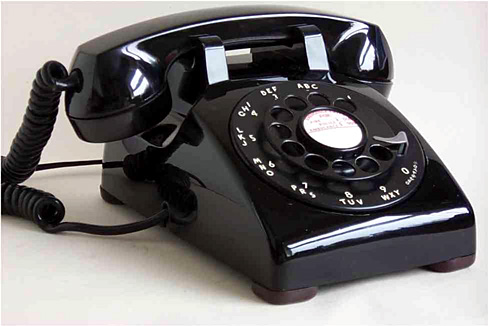
On the telephone, or on the air, man is in every sense discarnate, existing as an abstract image, a figure without a body. The Cheshire cat in Alice in Wonderland is a kind of parallel to our state. When discarnate, man has no identity, and is not subject to natural law. In fact he has no basis for morals of any sort. As electric information moved at the speed of light, man is a nobody. When deprived of his identity, man becomes violent in divers ways. Violence is the quest for identity. In Canada there is pending a large body of nihilistic legislation dedicated to the ideal of freedom. No-fault divorce is being succeeded by no-fault murder!Letter to Clare Boothe Luce, April 5, 1979, Letters of Marshall McLuhan
Sunday, December 19, 2010
Modern Reading
Modern reading, especially of the academic and professional type, is an activity performed by commuters or tourists; it is no longer that of pedestrians and pilgrims. The speed of the car and the dullness of the road and the distraction of billboards put the driver into a state of sensory deprivation that continues when he hurries through manuals and journals once he arrives at his desk. Like the tourist equipped with a camera, so today's student reaches for the photocopy to keep a souvenir snapshot. He is in a world of photographs, illustrations, and graphs which put the memory of illuminated letter-landscapes beyond his reach.
Ivan Illich, In the Vineyard of the Text, 1993
Tuesday, December 14, 2010
Sunday, November 28, 2010
Glass House Living
Electrical information devices for universal, tyrannical womb-to-tomb surveillance are causing a very serious dilemma between our claim to privacy and the community's need to know.
--Marshall McLuhan, The Medium is the Massage, 1967
For an interesting perspective on social and electronic media, check out The Public Isolation Project. Cristin Norine has devoted the entire month of November (even Thanksgiving!) to living in a glass storefront, only able to communicate with others through electronic media. CNN featured her last week:
Her time is coming to a close, but check out her blog for some thought-provoking meditations on what it is like to interact only through social media. One commenter compared her undertaking to Joshua Slocum, Sir Francis Chichester, and Amelia Earhart, showing us that now that we have conquered the natural environment, our media environment is the true frontier.
Via: Read Schuchardt
--Marshall McLuhan, The Medium is the Massage, 1967
For an interesting perspective on social and electronic media, check out The Public Isolation Project. Cristin Norine has devoted the entire month of November (even Thanksgiving!) to living in a glass storefront, only able to communicate with others through electronic media. CNN featured her last week:
Her time is coming to a close, but check out her blog for some thought-provoking meditations on what it is like to interact only through social media. One commenter compared her undertaking to Joshua Slocum, Sir Francis Chichester, and Amelia Earhart, showing us that now that we have conquered the natural environment, our media environment is the true frontier.
Via: Read Schuchardt
Thursday, November 11, 2010
The Poetry of Life
Recently seen on the Media Ecology Association listserv:
They are giving out these for free over at http://burningbooksposters.blogspot.com/, or you can buy one of their other interesting posters.
via: Read Schuchardt
Wednesday, November 3, 2010
The New Nomads
The most disadvantaged part of our culture is the suburbs--the rich suburbs--because these are the people who have plunged into the most primitive modes of awareness, thanks to electronics and thanks to the latest in everything. In other words the suburbs are more in contact with the 20th century than any other part of our culture and they are therefore the most primitive in the sense of Paleolithic hunter-oriented man.
In educational terms you have this paradox: that the most economically advantaged part of our community is the most disadvantaged culturally in terms of the sensory life. Now these people are in trouble. They are torn because they want to belong to the establishment--in fact they think of it as theirs--and yet they are, in terms of their new century involvement in the electric age, so deeply involved that their capacities for establishing contact with the visual world of rational order and visual connectives, their capacities for making that adjustment are just about zero.
![]() |
| The Wilderness Downtown |
In educational terms you have this paradox: that the most economically advantaged part of our community is the most disadvantaged culturally in terms of the sensory life. Now these people are in trouble. They are torn because they want to belong to the establishment--in fact they think of it as theirs--and yet they are, in terms of their new century involvement in the electric age, so deeply involved that their capacities for establishing contact with the visual world of rational order and visual connectives, their capacities for making that adjustment are just about zero.
--Marshall McLuhan, Education in the Electronic Age,
in The Best of Times/The Worst of Times:
Contemporary Issues in Canadian Education, 1970
Sunday, October 31, 2010
A Very Bad Idea
Although, to be sure, there are many positive aspects of new and emerging technologies, I am not the best person to answer your question. I have concentrated my attention on the possible negative consequences, mostly because everyone else seems to speak about the advantages technology will bring. Someone needs to mention what may be lost. Of course, one of the problems is that what I would judge to be a negative consequence, someone else might see as a positive consequence. For example, telephones in automobiles seem to me a very bad idea. So does spending a lot of hours "communicating" on the Internet when one could use that time reading Cervantes' Don Quixote.
--Neil Postman, 1996, in response to the question:
What are the positive effects of new and emerging technologies? Are there ways to maximize the benefits of the Internet and e-mail while minimizing the possible negative effects on society?
See the rest of his answers here: http://www.pbs.org/newshour/forum/january96/postman_1-17.html
--Neil Postman, 1996, in response to the question:
What are the positive effects of new and emerging technologies? Are there ways to maximize the benefits of the Internet and e-mail while minimizing the possible negative effects on society?
See the rest of his answers here: http://www.pbs.org/newshour/forum/january96/postman_1-17.html
Saturday, October 23, 2010
Sunday, October 10, 2010
The Humiliation of the Word
Culturally, then, we are no longer careful, close readers of texts, sacred or secular. We scan for information, but we do not appreciate literary craftsmanship. Exposition is therefore virtually a lost art. We don't really read texts to enter the world of the author and perceive reality through his vantage point; we read texts to see how they confirm what we already believe about reality. Texts are mirrors that reflect ourselves; they are not pictures that are appreciated in themselves. This explains, in part, the phenomenon that many Christians will read their Bibles daily for fifty years, and not have one opinion that changes for the entire fifty-year span. Texts do not change or alter or skew their perspective; texts do not move them or shape them; they merely use them as mnemonic devices to recall what they already know.
--T. David Gordon, Why Johnny Can't Preach:
The Media Have Shaped the Messengers, 2009
via: Read Schuchardt
Saturday, October 2, 2010
Educational Hypocrisy
If you wanted the kids to withdraw from involvement in the new electric environment, you should just programme it in your school system as necessary for examinations. Put the hit parade on the examination and all the comic books and all the movies and all the TV shows and examine every week in them and you will find a total desertion of the whole enterprise. If there is anything but hypocrisy in our protest about the vulgarity of our programming, we would do this. We are pure hypocrites. We can stop them from looking at every one of those shows by the simple gesture of using our school system. It works for Shakespeare; why shouldn't it work for Bonanza?
--Marshall McLuhan, Education in an Electronic Age,
in The Best of Times/The Worst of Times:
Contemporary Issues in Canadian Education, 1970
Thursday, September 30, 2010
The Education of Mike McManus
The following is a clip of an interview with Marshall McLuhan which aired on TVOntario in 1977. The description:
Mike McManus talks to Marshall McLuhan, the internationally-known critic of the media. McLuhan discusses modern regionalism and separatism, nostalgia, violence and identity, television as an addictive tranquilizer, propaganda, and his reasons for becoming a Roman Catholic.
While all of that sounds fascinating, the clip is only three minutes and doesn't capture the whole interview. TVOntario won't let me access the interview on their site, because I'm in the US, but I'd love to get my hands on the whole thing--especially the part about his reasons for becoming a Roman Catholic.
Here is a link to the full length video, if you are in a place where you can watch it:
Saturday, September 18, 2010
The Great Blackout
Media, by altering the environment, evoke in us their unique ratios of sense perceptions. The extension of any one sense alters the way we think and act--the way we perceive the world. Were the Great Blackout of 1965 to have continued for half a year, there would be no doubt how electric technology shapes, works over, alters--massages--every instant of our lives.
Marshall McLuhan, The Medium is the Massage, 1967
Tuesday, September 14, 2010
The End of the Landline
This just in from Wheaton College (not sure how many other campuses have already gone the same route):
Re: Elimination of Phones in Residence Halls
There are no longer active phone lines in residence hall rooms. Due to the fact that the vast majority of Wheaton students have cell phones, advancement in technology, and other reasons, it was decided to have the land lines discontinued. Phone lines remain in campus apartments and houses. Phones remain in the residence hall lobby areas for general student use with a prepaid calling card or for emergency 911 use. The Resident Assistant on each floor will also have a phone in his/her room for emergency purposes.
Please follow this link to the Residence Life website for more information on alternative communication systems which students can use: http://www.wheaton.edu/studentlife/reslife/policies-financial-faq/faq#idqo4dRzonbp96pM-Hp7afkQ
We understand that room phones have been a traditional way in which parents, professors and off-
campus community members have been directed by the switchboard to reach you. It will, therefore, be important for you to distribute your cell phone number accordingly. If you live in a residence hall, the College will NOT give out your cell phone number but rather your College email address.

If you live in a residence hall, please discuss ahead of time with your parents how to proceed if they need to contact you in case of an emergency and your cell phone is not available. If it is a true emergency, please have your parents contact Public Safety, who can put them in touch with the on duty Residence Life staff member in your building. If your parents desire contact information of other people, we suggest you give them your roommate or close friend's cell phone. If you have concerns that have not been addressed in this email please contact either --- or ---.
Thank you
The link provides this information:
How can I make phone calls if I do not have a cell phone?
Our residence hall rooms no longer have College provided phones. There are phones in the main lobbies and floor lounge areas where students will be able to dial 800 numbers, campus numbers and 9-911 in case of an emergency. Listed below are some communication options that students can use. These alternate methods of communication are not endorsed by Wheaton College, but are listed for your convenience.
Magic Jack- www.magicjack.com
Skype- www.skype.com
IChat- www.apple.com/macosx/what-is-macsx/ichat.html
Google Voice- www.google.com/voice - Save cell phone minutes by using Google Voice
Calling Cards
Skype- www.skype.com
IChat- www.apple.com/macosx/what-is-macsx/ichat.html
Google Voice- www.google.com/voice - Save cell phone minutes by using Google Voice
Calling Cards
Subscribe to:
Posts (Atom)