Showing posts with label Media Ecology. Show all posts
Showing posts with label Media Ecology. Show all posts
Tuesday, April 2, 2013
Introducing Second Nature Journal
SECOND NATURE
I'm proud to announce that I'll be moving over to a new site, Second Nature Journal, to focus on creating a place for people to dialogue about technology and media in light of the Christian tradition. The idea is to bring the people thinking and talking about this to one place with the hope of encouraging more discussion. My colleague, Brantly Millegan and I will be hard at work looking for the best content out there, and we will be accepting multi-media material (articles, visual art, poetry, music, videos, etc).
Feel free to kick around at Resident Alien to get an idea of what I see as the important strains in media ecology and then get over to Second Nature to see the best new material on the subject.
You can see my first article there, Thinking Trivially About Radical Orthodoxy, which traces the influence of the Church Fathers in McLuhan's thought and those scholars who identify as "radically orthodox."
Our press release:
April 1st, 2013 – The new online journal Second Nature officially launches today and plans to be the definitive place for critical thinking about technology and new media in light of the Christian tradition, with written articles, images, videos, poetry, and links.
The journal’s co-founders are Benjamin Robertson, Brantly Millegan, and Read Mercer Schuchardt. Robertson and Millegan both studied under Schuchardt, Associate Professor of Communication at Wheaton College (IL). Robertson and Millegan serve as the journal’s Editors, and Schuchardt is the Chairman of the Editorial Board. The other members of the Editorial Board are: Juliette Aristides, Eric Brende, Peter K. Fallon, Geraldine Forsberg, T. David Gordon, Shane Hipps, Arthur W. Hunt III, Eric McLuhan, and Brett T. Robinson. The board members represent a wide range of academic and professional backgrounds, denominational affiliations, and interests in the subject. For bios and pictures, see the journal’s About page.
The idea of the journal came about after Millegan wrote the article ‘Of Mics and Men‘, and couldn’t find a proper publication in which to publish it. In talking to Robertson and Schuchardt, they decided to form Second Nature. “Everybody knows new technologies like the Internet and smartphones are radically transforming our world, ” Millegan said. “So what does the Christian tradition have to offer to help us to think critically about these powerful tools, their meaning and their proper use? That’s one of the driving questions of the journal.”
The journal is now accepting submissions, which may come in the form of written pieces, images, or videos. While submissions should adhere to the general boundaries set by the journal’s description, there is no religious affiliation required for those submitting pieces. See the journal’s Contact page for full submission guidelines.
For launch, the journal has six published pieces: one painting and five written articles, on topics ranging from the eight characteristics of mass audiences created by electronic media, to how the Internet is reuniting families previously kept apart as a result of other technological innovations. The journal plans to publish a new piece every few weeks, bridging the publication schedule between a quarterly journal and a weekly website.
The journal also has a blog, which will be updated weekly with relevant news or other items of interest related to the journal’s topic. Examples of recent blog posts include: an article about an Italian priest who recently smashed a TV on the altar of his church during Mass to remind his parishioners to not become enslaved to technology; pictures from a new tumblr that gives life advice from machines; and a set of videos in which a person tests to see why people are comfortable with security cameras recording them but get very nervous when a person holding a camera does the same thing.
The journal hopes to eventually offer an annual print edition, conferences, and seminars.
The journal may be followed on Twitter, Facebook, Google+, by email, or with its RSS feed. The journal’s web address is http://secondnaturejournal.com.
All questions, comments, media inquiries, and submissions should be directed to contact@secondnaturejournal.com.


Friday, December 7, 2012
McLuhan's Literary Landscape
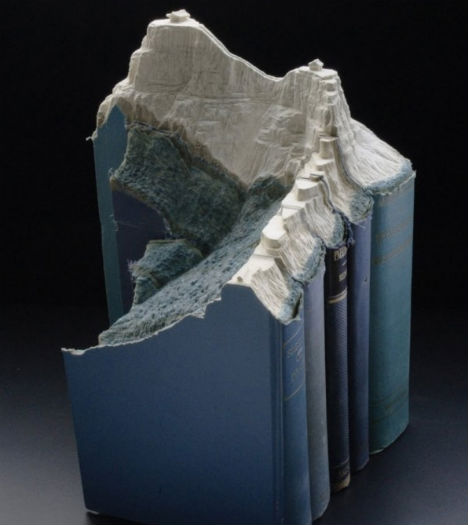 As soon as you adjust to McLuhan's literary landscape, you will start to look at things in a different way; you will see them as they truly are and learn how to see through them. You will see the grammarian through the guru, literature through technology, and the humanities through media. You will see through the literary origins of McLuhan's media studies, and, from there, you will set off on new explorations of your own. You will learn to apply McLuhan and understand why literature is not a subject but a function inseparable from our communal existence.
--Elena Lamberti, Marshall McLuhan's Mosaic, 2012
Thursday, October 20, 2011
McLuhan's Three Books
 With our accelerating cascade of new media it is borne upon us that each represents not an appendix to but a complete retranslation of the Book of the World, and of the reader. As W.B. Yeats sang, in 'Sailing to Byzantium':
 Once out of nature I shall never take
My bodily form from any natural thing,
But such a form as Grecian goldsmiths make
Of hammered gold and gold enamelling...Vico simply had not distinguished between first and second nature for separate study: nothing in his experience suggested such a distinction would be of any use. Second nature is nature made and remade by man as man remakes himself with his extensions. Separate them: the first is the province of traditional grammar; the second, that of Bacon, Vico, and Laws of Media.
Eric and Marshall McLuhan
Laws of Media
Friday, September 9, 2011
The New Res Publica
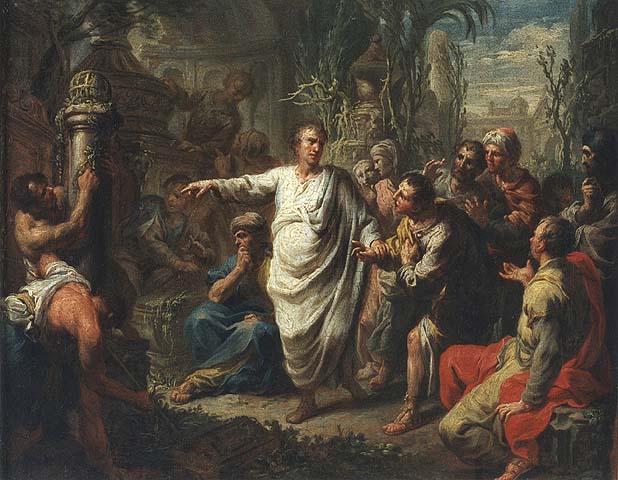
Marshall McLuhan
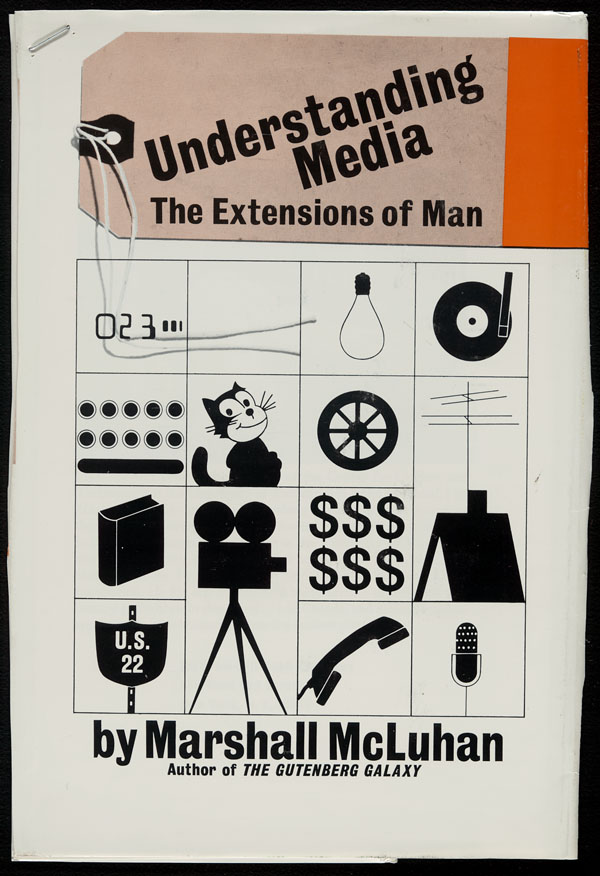
Understanding Media,
1964
Thursday, August 18, 2011
Why Bother With Marshall McLuhan?
Check out Alan Jacobs interesting and valuable meditation on the value (or lack thereof) in reading McLuhan:
"I have been reading McLuhan off and on since, at age sixteen, I bought a copy of The Gutenberg Galaxy. His centenary — McLuhan was born in Edmonton, Alberta on July 21, 1911 — provides an occasion for me to clarify my own oscillating responses to his work and his reputation. I have come to certain conclusions. First, that McLuhan never made arguments, only assertions. Second, that those assertions are usually wrong, and when they are not wrong they are highly debatable. Third, that McLuhan had an uncanny instinct for reading and quoting scholarly books that would become field-defining classics. Fourth, that McLuhan’s determination to bring the vast resources of humanistic scholarship to bear upon the analysis of new media is an astonishingly fruitful one, and an example to be followed. And finally, that once one has absorbed that example there is no need to read anything that McLuhan ever wrote."
http://www.thenewatlantis.com/publications/why-bother-with-marshall-mcluhan
"I have been reading McLuhan off and on since, at age sixteen, I bought a copy of The Gutenberg Galaxy. His centenary — McLuhan was born in Edmonton, Alberta on July 21, 1911 — provides an occasion for me to clarify my own oscillating responses to his work and his reputation. I have come to certain conclusions. First, that McLuhan never made arguments, only assertions. Second, that those assertions are usually wrong, and when they are not wrong they are highly debatable. Third, that McLuhan had an uncanny instinct for reading and quoting scholarly books that would become field-defining classics. Fourth, that McLuhan’s determination to bring the vast resources of humanistic scholarship to bear upon the analysis of new media is an astonishingly fruitful one, and an example to be followed. And finally, that once one has absorbed that example there is no need to read anything that McLuhan ever wrote."
http://www.thenewatlantis.com/publications/why-bother-with-marshall-mcluhan
Thursday, July 28, 2011
Interview with Read Schuchardt
Laureano Ralon has a great series of interviews over at his website, Figure/Ground Communications. His most recent interview is with my very own professor and mentor in media ecology, Read Schuchardt. Check it out:

http://figureground.ca/interviews/read-schuchardt/
http://figureground.ca/interviews/read-schuchardt/
Tuesday, June 7, 2011
Finding Your Way in a Sea of Information

Marshall and Eric McLuhan
Laws of Media,
1988
Saturday, May 28, 2011
Splitting the Etym

The "etym" is the fundamental 'bit' in the Joycean world, just as the atom is in the physical world. For Joyce, TV's annihilating of the 'etym' is as significant as in the realm of culture as the potentiality of destroying the atom in the physical world. Since, however, neither etym nor atom disappears as a result of the contemporary challenge, the process is abnihilisation, not actually a destruction.
Donald Theall
Beyond the Word,
1998
Tuesday, May 24, 2011
Media as Cliché as Probe
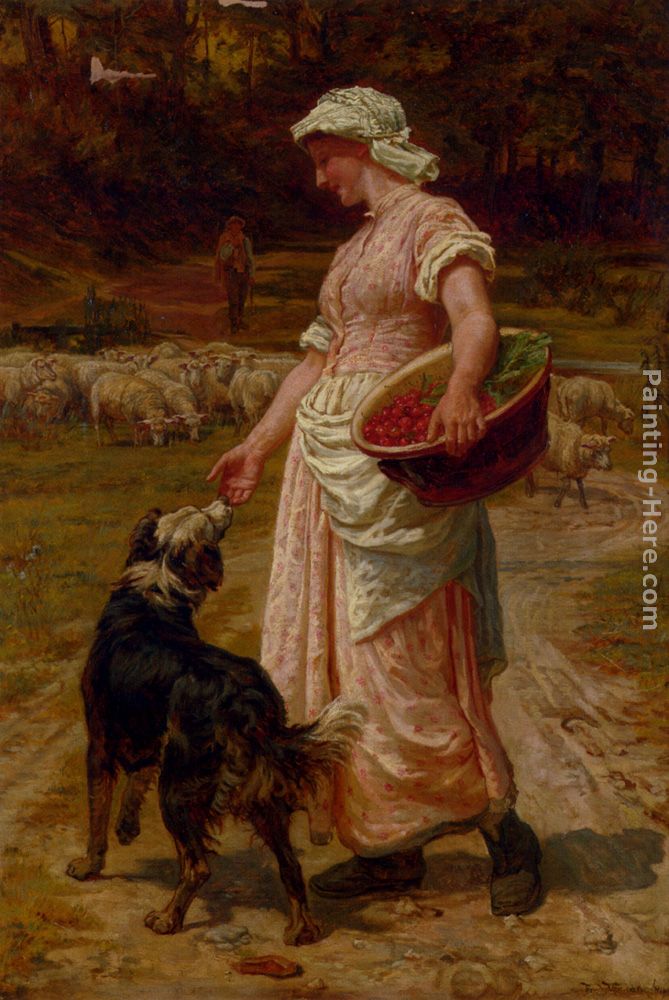
Marshall McLuhan
From Cliché to Archetype
1970
Friday, April 29, 2011
The Perpetual Nomad

Douglas Coupland, Marshall McLuhan:
You Know Nothing of My Work!
2009
Thursday, April 21, 2011
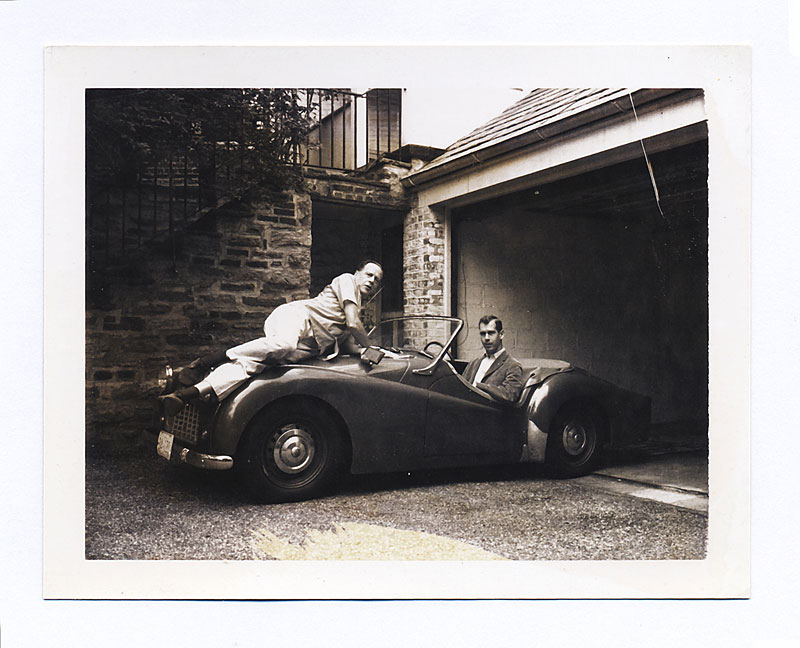
The Self Mover: Automobile
 |
| Source |
Donald Theall, James Joyce's Techno-Poetics, 1997
Monday, April 18, 2011
The Medium is the Message
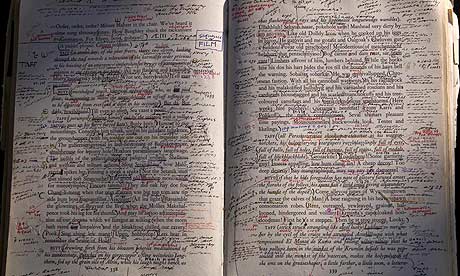
Samuel Beckett, "Dante... Bruno. Vico.. Joyce,"
in Our Exagmination Round His Factification
For Incamination of Work in Progress, 1929
Saturday, April 16, 2011
Beyond Media

Don Theall, Beyond the Word, 1995
Thursday, April 14, 2011
The Role of Media Ecology in Church History
I recently came across this well-written article by Michael Giobbe from the Media Ecology Association proceedings of 2009. It should be of special interest to those Christians interested in the intersection of faith, media ecology, and ecumenism.
Abstract:
"The leading figures in media ecology—Marshall McLuhan, Walter Ong, Neil Postman, Harold Innis, and Elizabeth Eisenstein—have all commented on the influence of various media environments upon the unfolding of church history. Their observations on the topic, however, have not to date been specifically collected and set into perspective with a view toward understanding more recent developments in that history. In this article, I undertake a preliminary overview of the subject, leading to two conclusions: First, the role of media ecology in church history is more varied, pervasive, and influential than previously thought. Secondly, therefore, by teaching media ecology as a unifying discipline either at the church or seminary level, one could actually deconflict that history, potentially leading to greater unity between church communities."
Full Article: http://www.media-ecology.org/publications/MEA_proceedings/v10/10_How_Wide.pdf
How Wide and How Long,
How High and How Deep:
The Role of Media Ecology in Church History
Abstract:
"The leading figures in media ecology—Marshall McLuhan, Walter Ong, Neil Postman, Harold Innis, and Elizabeth Eisenstein—have all commented on the influence of various media environments upon the unfolding of church history. Their observations on the topic, however, have not to date been specifically collected and set into perspective with a view toward understanding more recent developments in that history. In this article, I undertake a preliminary overview of the subject, leading to two conclusions: First, the role of media ecology in church history is more varied, pervasive, and influential than previously thought. Secondly, therefore, by teaching media ecology as a unifying discipline either at the church or seminary level, one could actually deconflict that history, potentially leading to greater unity between church communities."
Full Article: http://www.media-ecology.org/publications/MEA_proceedings/v10/10_How_Wide.pdf
Tuesday, April 5, 2011
Understanding Poetry
Cleanth Brooks and Robert Penn Warren,
Understanding Poetry,
1960
Saturday, April 2, 2011
The Joyce of McLuhan Studies

Eric McLuhan, The Role of Thunder in Finnegans Wake, 1997
Thursday, March 31, 2011
Technological Determinism

Marshall McLuhan, Letters of Marshall McLuhan
Tuesday, March 29, 2011
What the Public Wants
Nobody wants a motorcar until there are motorcars, and nobody is interested in TV till there are TV programs. This power of technology to create its own world of demand is not independent of technology being first an extension of our own bodies and senses.
Once we have surrendered our senses and nervous systems to the private manipulation of those who would try to benefit from taking a lease on our eyes and ears and nerves, we don't really have any rights left. Leasing our eyes and ears and nerves to commercial interests is like handing over the common speech to a private corporation, or like giving the earth's atmosphere to a company as a monopoly.
Marshall McLuhan, Understanding Media, 1964
Once we have surrendered our senses and nervous systems to the private manipulation of those who would try to benefit from taking a lease on our eyes and ears and nerves, we don't really have any rights left. Leasing our eyes and ears and nerves to commercial interests is like handing over the common speech to a private corporation, or like giving the earth's atmosphere to a company as a monopoly.
Marshall McLuhan, Understanding Media, 1964
Wednesday, March 23, 2011
The Wild Broncos of Technology

Marshall McLuhan
Explorations in Communication
1966
Friday, March 18, 2011

Subscribe to:
Posts (Atom)