Showing posts with label Community. Show all posts

Wednesday, November 2, 2011

A Culture of Death


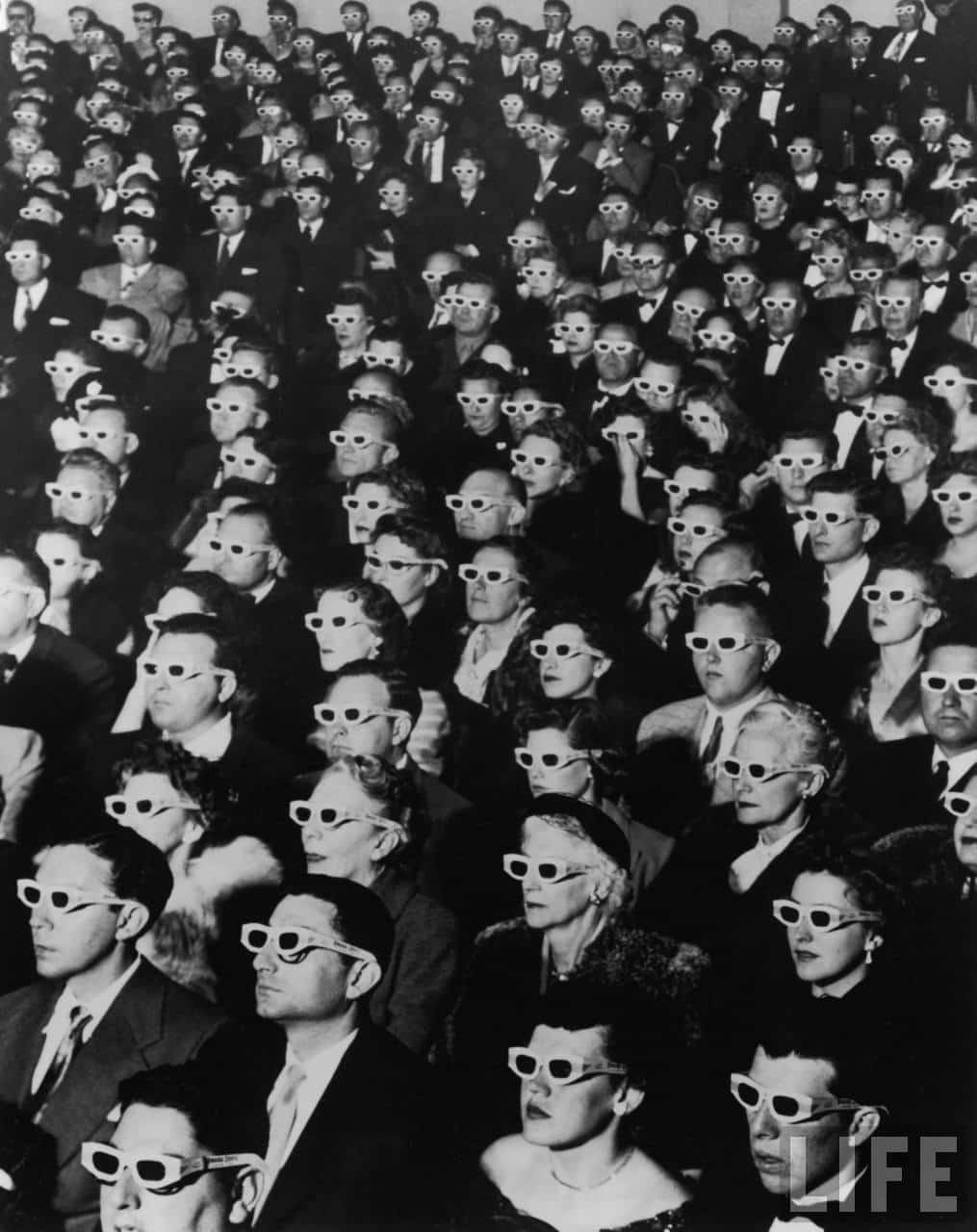
Wherever one looks, one encounters this same intent: to restructure society without community


Guy Debord
Society of the Spectacle
1967

Wednesday, December 29, 2010

The Business of School

The principal argument is that teachers are not competent to serve as priests, psychologists, therapists, political reformers, social workers, sex advisers, or parents. That some teachers might wish to do so is understandable, since in this way they may elevate their prestige. That some would feel it necessary to do so is also understandable, since many social institutions, including the family and the church, have deteriorated in their influence. But unprepared teachers are not an improvement on ineffective social institutions; the plain fact is that there is nothing in the background or education of teachers that qualifies them to do what other institutions are supposed to do. It should be clear, by the way, that in this argument the phrase "unprepared teachers," does not mean that teachers cannot do their work. It means they cannot do everyone's work.


Neil Postman, The End of Education, 1995

Saturday, June 19, 2010

A True Solidarity: Exploring Christian Community in the Thought of Jacques Ellul

One of Ellul’s most compelling arguments is his analysis of the social alienation experienced by the individual within the technological society. In reading Ellul, I wanted to uncover his thought regarding a possible Christian response to this alienation. Clifford Christians’ article “Ellul on Solution” (1981), in which Dr. Christians discusses the frustrating nature of Ellul’s “heavy individualism,” was a great starting point and gave me a filter for reading Ellul on community. The three-pronged approach Dr. Christians identifies within Ellul’s writing—awareness, transformation, and the concrete action based on these two—is most clear when it is understood in the context of Ellul’s Christianity as a response to alienation, and we will approach his thought in this order (p. 154).

Awareness

As Ellul (1967b) says, “The first duty of a Christian intellectual today is the duty of awareness” (p. 98). Thus, we begin with an exploration of the sociological conditions of our technological society as described by Ellul. The key idea in Ellul’s thought (1965) concerning the topic of alienation and community is the sociological reorganization along technical values accompanying the individualist trend in 19th century Europe (p. 93). Ellul’s concept of the individualist and mass society is integral to understanding the shift away from traditional sociological organization (p. 90). Alienation occurs within the technological society largely due to the value given to the individual, which eclipses the value of any group affiliation (p. 20). Thus, when “the small groups that are an organic fact of the entire society”—such as the family, village, or parish—are broken up, the individual does not become a free, self-made man, but is made defenseless against propaganda and social currents, resulting in “direct integration into mass society” (pp. 90-92). Western, technological society is a society of alienated individuals organized in an unstructured mass.

Ellul reveals the spiritual significance of the sociology of the mass in his Meaning of the City (1970). Here, Ellul describes the mass as a constant force and source of alienation; a “sheet of glass” between every individual that is invisible but completely isolating (p. 125). For Ellul, the mass society is a dangerous spiritual reality. Freedom from this danger comes in the awareness brought by the presence of Jesus (p. 129). The Christian convert has a radically new framework for approaching the mass, the city, and technological society, granting him true awareness of his circumstances and the freedom to change them. His spiritual freedom enables him to work as an acid, decomposing the bonds and structure of alienation within technological society (p. 133).

Transformation

What kind of sociological transformation does this spiritual freedom allow? Ellul treats this question in several books under different terms. In The Technological Society (1964), he discusses “real community,” which is necessarily anti-technical because of its particularism (pp. 207-208). He develops this idea further in Propaganda (1965), with the depiction of “local, organic groups,” which are able to resist psychological technique (propaganda) and to be well off materially, spiritually, and emotionally (p. 91). Furthermore, in The Political Illusion (1967a), Ellul advocates for the creation of “positions in which we reject and struggle with the state,” which take the form of “social, political, intellectual, or artistic bodies, associations, interest groups, or economic or Christian groups totally independent of the state, yet capable of opposing it, able to reject its pressures as well as its controls, and even its gifts” (p. 221). These associations must be intellectually, materially, and morally independent of the state in order to be truly confrontational and anti-technical, and their existence as such re-introduces value systems that are not technical in nature (p. 222). Nevertheless, what is it that allows the real community present within local, organic, independent groups to be truly independent and anti-technical?

The answer for Ellul is, of course, that they must be Christian. In The Presence of the Kingdom (1967b), we find a similar discussion regarding the role of the church in the technological society. For Ellul, Christians ought to create a new style of life that “permits them to escape from the stifling pressure of our present form of civilization” (p. 46). Most importantly, this endeavor is “a work that is both collective and individual,” and “necessarily a corporate act” (pp. 122-3). In fact, an essential condition for this new style of life is “the substitution of a true solidarity among Christians (a solidarity—voluntarily created by obedience to the will of God) for the sociological solidarity, purely mechanical in character, which is being dinned into our ears, and which people want to make the basis of the new world” (p. 124).

Concrete Action

Undoubtedly, there is overlap between Ellul’s ideas of real community, organic groups, independent associations, and true solidarity among Christians. Furthermore, there is an inherent opposition in his writing between the sociological forms of our society and the responsibilities of Christians. We would misunderstand Ellul, however, if we took him to be advocating a return to an idyllic past. Ellul’s ideas regarding dialectic and the ecological effects of technique prevent him from valuing any historical situation over any other; there is no dialectical progress, and regression is impossible. There is only change. Thus, Ellul is hesitant to advocate any concrete plan of action.

This is often what people find most frustrating about Ellul, yet he is simply attempting to avoid creating a group of his own followers, leaving the reader with great responsibility. It is difficult to find any concrete solution in Ellul’s writing, but this is only because Ellul knows that problems must be addressed at the level of the real man (1967b p. 82). What then is the significance of community in all this? Ellul (1976) answers in his typically overstated fashion: “the particularity of the individual makes no sense and has no value unless it finds expression in a community” (p. 296). Accordingly, we are to understand that Christ calls his followers out of technological alienation into communion with the Church, as a body that may prophetically point to the ever-imminent Kingdom of God.

Works Cited

Christians, C. G. (1981). Ellul on Solution: An Alternative but No Prophecy. In C. G. Christians and J. M. Van Hook (Ed.), Jacques Ellul: Interpretive Essays (pp.147-165). Urbana: University of Illinois Press.

Ellul, J. (1964).
The Technological Society. New York: Vintage Books.

---. (1965).
Propaganda: The Formation of Men’s Attitudes. New York: Vintage Books.

---. (1967a).
The Political Illusion. New York: Alfred A. Knopf.

---. (1967b).
The Presence of the Kingdom. Colorado Springs: Helmers & Howard.

---. (1970).
The Meaning of the City. Grand Rapids, MI: Eerdmans Publishing.

---. (1976).
The Ethics of Freedom. Grand Rapids, MI: Eerdmans Publishing.


This was published in the most recent edition (Spring 2010) of
The Ellul Forum. If you like Ellul, you should check them out!

Monday, June 14, 2010

The Specter of the Spectacle: Guy Debord’s Neo-Marxist Media Theory


What do we really mean when we call something “spectacular"? Was Avatar spectacular because of the morals one might take from the story or because of the best special effects ever to be featured in a movie? The dictionary says that spectacular means “beautiful in a dramatic or eye-catching way,” and Avatar certainly was! Guy Debord, however, in his 1967 book The Society of the Spectacle, discusses what it really means for something to be spectacular, providing a much more penetrating significance. His incisive social critique surrounds what he sees as the defining characteristic of modern-day society: the spectacle. Similar to McLuhan’s focus on the transforming effects of media and Ellul’s all-encompassing view of the technological society, Debord’s spectacle reaches into all aspects of life and transforms them, acting as “a world view transformed into an objective force” (Debord 13). Debord’s concept of the spectacle is wide-ranging, and he explains how even in his time (before blogs, twitter, the internet, or even the personal computer) the spectacle has transformed society.
Debord’s definition of “spectacle” is peculiar, and he offers many definitions, corresponding to his use of the term as an all-encompassing descriptor of modern day society. Each definition contributes a new aspect or dimension of the spectacle’s existence, qualities, or transformative powers. The most general definition Debord offers we have already mentioned: the spectacle as a “world view transformed into an objective force (13). The world view provided by the spectacle finds its source in Western philosophy, the primary goal of which was “an attempt to understand activity by a means of the categories of vision” (17). As a result of the visual focus of the Enlightenment empiricists and other Western philosophy, modern society is now experiencing all the weaknesses of such an unbalanced understanding of the world.
This misunderstanding of reality has several implications for social relations, and social alienation is key to Debord’s understanding of the spectacle and society. For instance, “the spectacle is not a collection of images; rather it is a social relationship between people that is mediated by images” (12). The mediation of social relationships by the spectacle is a transformation of traditional social relations. As a result of the spectacle’s abundance within society, the world is divided into two parts: reality and the self-representation of reality, which becomes superior to reality (22). The spectacle then functions as “the common language that bridges this division” (22).
Imagine two families, one relaxing around a fire, the other relaxing around a TV. The first family, gathered around the fire, can talk about the fire, but for a more interesting conversation, they must draw from some other source; perhaps the story of the fish that got away or the bear that almost didn’t go away. The second family is provided the bridge of communication by the television. They might watch the fisherman on the Outdoor Channel catch a fish or watch a bear attack on the Discovery Channel, but their social relationship in this setting centers around the television and the stories it provides them. People often view watching television with others as a ‘communal’ act, and don’t mind the use of television unless it becomes isolating. Yet, Debord sees this kind of one-way relationship to each other via the screen as uniting what is separate, though “it unites only in its separateness” (22).
More than just screen technologies demonstrate the spectacle, as isolation underpins all technology: “all goods proposed by the spectacular system, from cars to televisions, also serve as weapons for that system as it strives to reinforce the isolation of the ‘lonely crowd’” (22). In short, the goal of the spectacular society is “to restructure society without community” (137). This is evident in many different realms, particularly social relations and economics. Much of Debord’s book is a neo-Marxist discussion of the present-day situation of the proletariat, revealing how social isolation via the spectacle has prevented the development of a proletariat class consciousness and an ensuing revolution (89). The overthrow of the society of the spectacle is thus directly related to the proletariat overcoming alienation and revolting against the isolation of technology in a disalienating way (154).
Nevertheless, technology pervades our society, and the rapid increases in technology we have witnessed even in the forty years since Debord’s book have only further ingrained the idea of the spectacle as “the bad dream of modern society in chains, expressing nothing more than its wish for sleep” (18). That the spectacle is the guardian of this sleep is evident within Maggie Jackson’s book Distracted: The Erosion of Attention and the Coming Dark Age. Certainly, her title is dramatic enough to compete with the intensity of Debord’s writing, and her writing reveals several phenomenon surrounding the topic of attention that reinforce Debord’s understanding of the spectacle.
A key idea within Jackson’s book that corresponds directly to Debord’s thesis is that “as the virtual shatters our conceptions of space and simultaneity redefines our notions of time, … a life of perpetual movement reshapes our relationship to place and what it means to be in the world” (Jackson 99). Jackson describes how our technologies have shaped us and our environment, and how this environment continues to reshape us. For instance, Jackson notes the very portable and mobile nature of modern-day Americans, quoting various statistics about dramatic increases in average annual number of miles driven and that “at any one time, three hundred thousand people are in flight above the United States” (101). The portability of our technology allows us the luxury of ‘staying in touch’ though we may be travelling across the world. Our social networking technology via the internet and other portable media devices certainly embody Debord’s understanding of isolation underpinning technology (22). Though we say we are staying in touch, touch is in fact completely unavailable via mediated communication.
Nonetheless, some maintain that virtual reality is still a form of reality, and Jackson documents the phenomenon wherein virtual reality is preferred to reality (66). This circumstance was obvious even forty years ago to Debord in his view of the division of the world into two parts: reality and self-representation (22). The young teenager preferring his video games to eating dinner with his family or the businessman preferring his Blackberry to his children both favor their particular virtual world because it is mediated via the spectacle. The teenager playing with his online friends and the businessman e-managing his coworkers are isolated not only from those around them but from those whom they are trying to communicate; they are united only in separateness (Debord 22).
Technology allows us to do more than just telecommunicate, it also allows us to “filter out noise, too-muchness, and others” (Jackson 65). Jackson gives the example of a DVD player in a minivan as a way for parents to ignore their children, and we see similar examples everyday: a wall of music via the iPod, the ability to ignore someone next to you in order to text someone across the room, and cell phone talkers at stores who are blissfully ignorant of anyone around them. What is the result of having so much ‘control’ over who we have to encounter? Jackson says that if we choose to filter out the actual world, “we become attentional wanderers, sated by the mirage” (67, see also Nicholas Carr’s new book, The Shallows). This is not necessarily the only result. Though a constant attunement to the distraction-making technologies that surround us certainly divides our attention, Debord’s assessment of the control that technology gives us is much more incisive: “the closer his life comes to being his own creation, the more drastically is he cut off from that life” (24). For both Debord and Jackson, there is something in the incontrollable, chance encounters in life that are more real and not to be avoided. In fact, these encounters seem to humanize people. Is there really something in a chance encounter that humanizes us, so that when we are caught off-guard we are really more ourselves?
Works Cited
Debord, Guy. The Society of the Spectacle. New York: Zone Books, 1995.
Jackson, Maggie. Distracted: The Erosion of Attention and the Coming Dark Age. Amherst, NY: Prometheus Books, 2009.