Sunday, October 31, 2010

A Very Bad Idea

Although, to be sure, there are many positive aspects of new and emerging technologies, I am not the best person to answer your question. I have concentrated my attention on the possible negative consequences, mostly because everyone else seems to speak about the advantages technology will bring. Someone needs to mention what may be lost. Of course, one of the problems is that what I would judge to be a negative consequence, someone else might see as a positive consequence. For example, telephones in automobiles seem to me a very bad idea. So does spending a lot of hours "communicating" on the Internet when one could use that time reading Cervantes' Don Quixote.


--Neil Postman, 1996, in response to the question:
What are the positive effects of new and emerging technologies? Are there ways to maximize the benefits of the Internet and e-mail while minimizing the possible negative effects on society?


See the rest of his answers here: http://www.pbs.org/newshour/forum/january96/postman_1-17.html

Thursday, October 28, 2010

Entering Through the Back Door

Here is a fragment of an interview with Marshall McLuhan by Nina Sutton in 1975, in which they discuss his conversion to Catholicism. Enjoy!


This clip is made available by the Library and Archives of Canada at the following link:

via: Read Schuchardt

The End of Education, pt. II

Education plays, and will continue to play, a much more important part in government than physical and exterior force. Force is a passing and precarious thing, whereas to get inside a person' mind and change his very personality is the effective way of reducing him and making him yours. Merely to chain him up like a dog or a slave is meaningless. To kill him is equally meaningless. It is by taking him when he is very young, and educating him, that you can secure him to yourself.


--Wyndham Lewis, The Art of Being Ruled, 1926

Monday, October 25, 2010

Grammar and the Laws of Media

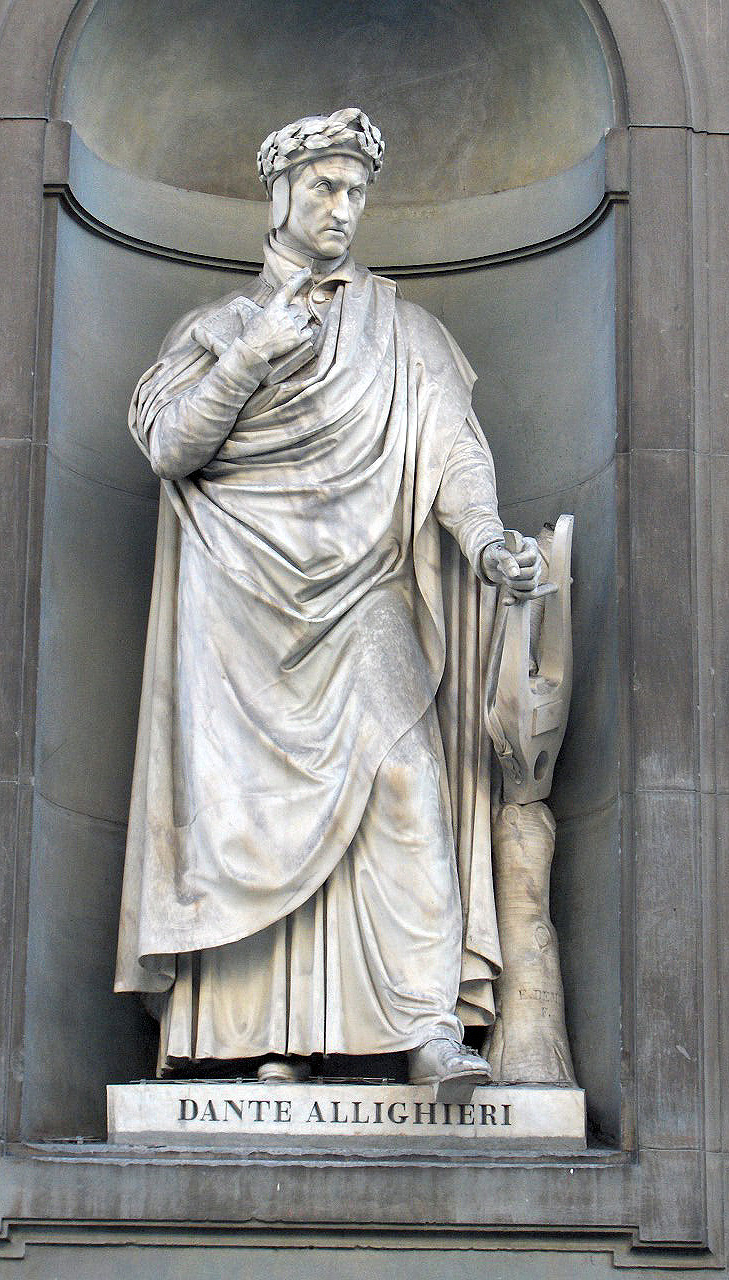
The very events of history are a gigantic and complex statement to which the methods of grammatical exegesis are applicable; and this point of view is as helpful for the understanding of Dante as of Milton, not to mention subjects of greater extent.


Marshall McLuhan, The Classical Trivium, 2006

Wednesday, October 20, 2010

On Aphorism

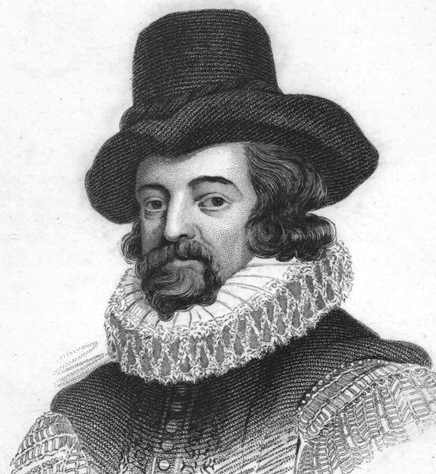
But the writing in aphorisms hath many excellent virtues, whereto the writing in Method doth not approach. For first, it trieth the writer, whether he be superficial or solid: for Aphorism, except they should be ridiculous, cannot be made but of the pith and heart of sciences; for discourse of illustration is cut off; recitals of examples are cut off; discourse of connexion and order is cut off; descriptions of practice are cut off. So there remaineth nothing to fill the aphorisms but some good quantity of observation: and therefore no man can suffice, nor in reason will attempt, to write aphorisms, but he that is sound and grounded. ... And lastly, Aphorisms, representing a knowledge broken, do invite men to inquire farther; whereas Method, carrying the show of a total, do secure men, as if they were at farthest.


Francis Bacon, The Advancement of Learning, 1605

Monday, October 18, 2010

On Writing and Reading

There are two kinds of writing:


A. Books a man reads to develop his capacities, in order to know more and perceive more, and more quickly, than he did before he read them.


B. Books that are intended and that serve as REPOSE, dope, opiates, mental beds.


--Ezra Pound, ABC of Reading, 1934

Saturday, October 16, 2010

History

Not to study what happened before we were born is to always remain a child.


--Cicero


To be deep in history is to cease to be Protestant.

--John Henry Cardinal Newman

Wednesday, October 13, 2010

The Art of Being Ruled

Could this be published today? Wyndham Lewis' introduction to The Art of Being Ruled:


Most books have their patients, rather than their readers, no doubt. But some degree of health is postulated in the reader of this book. Its pages are not intended to supply the figurative equivalent of Kruschen Salts or an enema. Nor is it the intention of its author to open a clinic or a nursing-home, or an institute for the half-witted, nor yet a beauty-parlor. Understanding on that point with the reader at the start will be an advantage.


A book of this description is not written for an audience already there, prepared to receive it, and whose minds it will fit like a glove. There must be a good deal of stretching of the receptacle, it is to be expected. It must of necessity make its own audience; for it aims at no audience already there with which I am acquainted. I do not invent (or if that was not an invention, then I am not happy enough to know) a class of esprits libres, or 'good Europeans,' as Nietzsche did. I know none.


Wyndham Lewis,  The Art of Being Ruled, 1926

Sunday, October 10, 2010

The Humiliation of the Word

Culturally, then, we are no longer careful, close readers of texts, sacred or secular. We scan for information, but we do not appreciate literary craftsmanship. Exposition is therefore virtually a lost art. We don't really read texts to enter the world of the author and perceive reality through his vantage point; we read texts to see how they confirm what we already believe about reality. Texts are mirrors that reflect ourselves; they are not pictures that are appreciated in themselves. This explains, in part, the phenomenon that many Christians will read their Bibles daily for fifty years, and not have one opinion that changes for the entire fifty-year span. Texts do not change or alter or skew their perspective; texts do not move them or shape them; they merely use them as mnemonic devices to recall what they already know.


--T. David Gordon, Why Johnny Can't Preach: 
The Media Have Shaped the Messengers, 2009


via: Read Schuchardt

Thursday, October 7, 2010

The End of Education

Q. Do you think it is our job as educationists to increase the capacity of the student to come to grips with this new experience of a new technology?


A. They are totally at grips with it and what we want to give them is some detachment.


--Marshall McLuhan, Education in an Electronic Age,
in The Best of Times/The Worst of Times:
Contemporary Issues in Canadian Education, 1970

Monday, October 4, 2010

Intellectual Thuggery

Source
I am an intellectual thug who has been slowly accumulating a private arsenal with every intention of using it. In a mindless age every insight takes on the character of a lethal weapon. 


--Marshall McLuhan, Letter to Ezra Pound, 1951

Saturday, October 2, 2010

Educational Hypocrisy

If you wanted the kids to withdraw from involvement in the new electric environment, you should just programme it in your school system as necessary for examinations. Put the hit parade on the examination and all the comic books and all the movies and all the TV shows and examine every week in them and you will find a total desertion of the whole enterprise. If there is anything but hypocrisy in our protest about the vulgarity of our programming, we would do this. We are pure hypocrites. We can stop them from looking at every one of those shows by the simple gesture of using our school system. It works for Shakespeare; why shouldn't it work for Bonanza?


--Marshall McLuhan, Education in an Electronic Age,
in  The Best of Times/The Worst of Times:
Contemporary Issues in Canadian Education, 1970