Tuesday, December 27, 2011

A Wayfarer and a Pilgrim

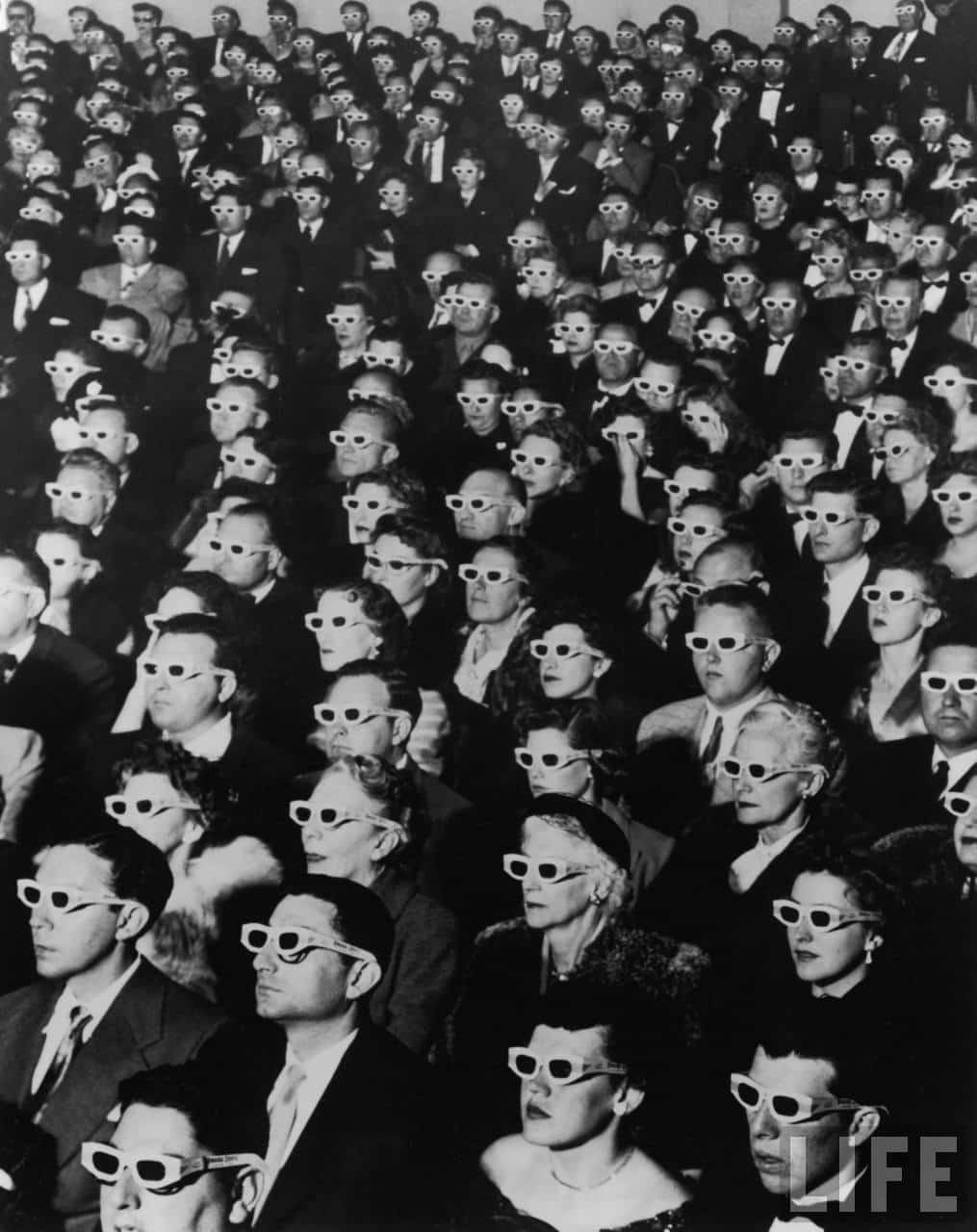
But since it seems appropriate to say a word about The Moviegoer, it is perhaps not too farfetched to compare it in one respect with the science of pathology. Its posture is the posture of the pathologist with his suspicion that something is wrong. There is time for me to say only this: that the pathology in this case has to do with the loss of individuality and the loss of identity at the very time when words like the "dignity of the individual" and "self-realization" are being heard more frequently than ever. Yet the patient is not mortally ill. On the contrary, it speaks well for the national health that pathologists of one sort and another are tolerated and even encouraged.


In short, the book attempts a modest restatement of the Judeo-Christian notion that man is more than an organism in an environment, more than an integrated personality, more even than a mature and creative individual, as the phrase goes. He is a wayfarer and a pilgrim.


Walker Percy
Accepting the National Book Award
for The Moviegoer, 1962

Wednesday, November 2, 2011

A Culture of Death


Wherever one looks, one encounters this same intent: to restructure society without community. 


Guy Debord
Society of the Spectacle
1967

Thursday, October 20, 2011

McLuhan's Three Books

With our accelerating cascade of new media it is borne upon us that each represents not an appendix to but a complete retranslation of the Book of the World, and of the reader. As W.B. Yeats sang, in 'Sailing to Byzantium': 


Once out of nature I shall never take
My bodily form from any natural thing,
But such a form as Grecian goldsmiths make
Of hammered gold and gold enamelling...
Vico simply had not distinguished between first and second nature for separate study: nothing in his experience suggested such a distinction would be of any use. Second nature is nature made and remade by man as man remakes himself with his extensions. Separate them: the first is the province of traditional grammar; the second, that of Bacon, Vico, and Laws of Media.


Eric and Marshall McLuhan
Laws of Media 


Wednesday, October 19, 2011

Liberty, Technology, and the Advent of Social Networking

St. Michael the Boss
Interesting article by  Harvad PhD candidate, Gladden J. Pappin, discussing the intersection of virtue, vice, and social media, with nods to McLuhan and Baudrillard. 


How does technology recast the relationship between liberty and virtue?


"To fashion our network double we have to resolve ourselves into our constituent parts, advance some and suppress others, make ourselves the medium without making our souls the message.


"The community of the Internet is now as spiritual as the communion of saints once was, so it is fitting that McLuhan thought Thomas Aquinas's angelology was important in understanding the media. Through social networking we receive not prayers and graces but links and likes. The church triumphant appears in virtual reality, where all things are possible and everything is realized virtually in the mystical body of the web. As in the resurrection of the body, logging off from your account gives you your body back, this time not glorified but fraught with anxiety, the church suffering after triumph rather than the reverse. Signed off from your account, you are now unaccounted-for. Reality itself becomes the afterlife, the postmodern No Exit where hell is virtual people. The advent of virtual reality, not to say the beginning of modern politics itself, detaches human beings from the consolations of church, city, and family that wayfarers in this life once thought they had. A late-modern Augustine could not see technology as just another dimension of alienation from our heavenly home. We are now aliens twice removed."

Wednesday, September 28, 2011

I've Never Seen Anything Like It!

Really, I haven't! The Fordham website for the Marshall McLuhan Centenary has posted the audio recording from a class McLuhan taught during his year at Fordham in 1967. Totally awesome!


Marshall McLuhan Lecturing at Fordham


Monday, September 19, 2011

Kill Your TV or it Might Kill You!

Is too much TV as dangerous as smoking? Check out this article on the Australian research.


"eve­ry hour of TV watched af­ter age 25 may slice about 22 min­utes off your life, an effect equi­val­ent to that of two cigarettes"


Saturday, September 17, 2011

Marshall McLuhan's Unmediated Faith

An interesting article on McLuhan's Catholicism, originally posted at the Catholic Herald, now reposted on Thirteen:


St. Basil's at University of Toronto

Wednesday, September 14, 2011

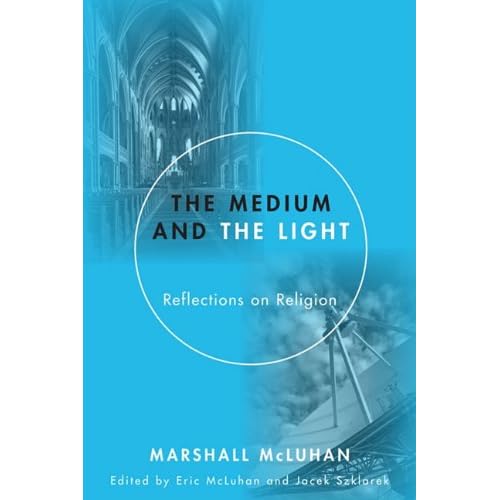
The Medium and the Light

Strange is the blindness of the intellect which does not consider that which it sees before all others and without which it can recognize nothing. But just as the eye, intent on the various differences of color, does not see the light through which it sees other things, or if it does see, does not notice it, so our mind's eye, intent on particular and universal beings, does not notice that being which is beyond all categories, even though it comes first to the mind, and through it, all other things.


St. Bonaventure
Itinerarium Mentis in Deum

Friday, September 9, 2011

The New Res Publica

After the Second War, an ad-conscious American army officer in Italy noted with misgiving that Italians could tell you the names of cabinet ministers, but not the names of commodities preferred by Italian celebrities. Furthermore, he said, the wall space of Italian cities was given over to political, rather than commercial slogans. He predicted that there was small hope that Italians would ever achieve any sort of domestic prosperity or calm until they began to worry about the rival claims of cornflakes and cigarettes, rather than the capacities of public men. In fact, he went so far as to say that democratic freedom very largely consists in ignoring politics and worrying, instead, about the threat of scaly scalp, hairy legs, sluggish bowels, saggy breasts, receding gums, excess weight, and tired blood.


Marshall McLuhan
Understanding Media,
1964

Thursday, August 18, 2011

Why Bother With Marshall McLuhan?

Check out Alan Jacobs interesting and valuable meditation on the value (or lack thereof) in reading McLuhan:

"I have been reading McLuhan off and on since, at age sixteen, I bought a copy of The Gutenberg Galaxy. His centenary — McLuhan was born in Edmonton, Alberta on July 21, 1911 — provides an occasion for me to clarify my own oscillating responses to his work and his reputation. I have come to certain conclusions. First, that McLuhan never made arguments, only assertions. Second, that those assertions are usually wrong, and when they are not wrong they are highly debatable. Third, that McLuhan had an uncanny instinct for reading and quoting scholarly books that would become field-defining classics. Fourth, that McLuhan’s determination to bring the vast resources of humanistic scholarship to bear upon the analysis of new media is an astonishingly fruitful one, and an example to be followed. And finally, that once one has absorbed that example there is no need to read anything that McLuhan ever wrote."


http://www.thenewatlantis.com/publications/why-bother-with-marshall-mcluhan

Thursday, July 28, 2011

Interview with Read Schuchardt

Laureano Ralon has a great series of interviews over at his website, Figure/Ground Communications. His most recent interview is with my very own professor and mentor in media ecology, Read Schuchardt. Check it out:


http://figureground.ca/interviews/read-schuchardt/

Tuesday, June 7, 2011

Finding Your Way in a Sea of Information

The goal of science and the arts and of education for the next generation must be to decipher not the genetic but the perceptual code. In a global information environment, the old pattern of education in answer-finding is of no avail: one is surrounded by answers, millions of them, moving and mutating at electric speed. Survival and control will depend on the ability to probe and to question in the proper way and place. As the information that constitutes the environment is perpetually in flux, so the need is not for fixed concepts but rather for the ancient skill of reading that book, for navigating through an ever uncharted and unchartable milieu. Else we will have no more control of this technology and environment than we have of the wind and the tides.


Marshall and Eric McLuhan
Laws of Media,
1988

Monday, May 30, 2011

McLuhan and the Eyes of Faith

I wouldn't have seen it if I hadn't believed it.
Marshall McLuhan
Marshall didn't publicly discuss his religion. His theory was that people who can see don't walk around saying, "I'm seeing things" all day. They simply see the world. And so, with religion, it was simply there with him. This unwillingness to discuss religion caused him much trouble. Some people perceived it as arrogance. Some people saw it is as weakness and shirking. Some people saw it was outdated and ridiculous. Some saw it as a wasted chance to make converts.

Douglas Coupland, Marshall McLuhan:
You Know Nothing of My Work!
2009

Saturday, May 28, 2011

Splitting the Etym

The "etym" is the fundamental 'bit' in the Joycean world, just as the atom is in the physical world. For Joyce, TV's annihilating of the 'etym' is as significant as in the realm of culture as the potentiality of destroying the atom in the physical world. Since, however, neither etym nor atom disappears as a result of the contemporary challenge, the process is abnihilisation, not actually a destruction.

Donald Theall
Beyond the Word,
1998

Tuesday, May 24, 2011

Media as Cliché as Probe

Any extension of man's sensory life such as the dog, or the motor car, imprints numerous clichés on any language, extending its range of probe. All media of communications are clichés serving to enlarge man's scope of action, his patterns of association and awareness. These media create environments that numb our powers of attention by sheer pervasiveness. The limits of our awareness of these forms does not limit their action upon our sensibilities. Just as the rim-spin of the planet arranges the components of high- and low-pressure areas, so the environments created by linguistic and other extensions of our powers are constantly creating new climates of thought and feeling. Since the resulting symbolic systems are numerous, they are in perpetual interplay, creating a kind of sound-light show on an ever-increasing scale.


Marshall McLuhan
From Cliché to Archetype
1970

Friday, April 29, 2011

The Perpetual Nomad

All this information and more has overtly, osmotically, or perhaps inadvertently damaged a collective sense of time that has been working well enough since the Industrial Revolution and the rise of the middle classes. This "timesickness" is probably what killed the economy, and God only knows what it's up to next. Everywhere we look, people are making online links--to conspiracy, porn, and gossip sites; to medical data sites and genetics sites; to baseball sites and sites for Fiestaware collectors; to sites where they can access free movies and free TV, arrange hookups with old flames or taunt old enemies--and time has begun to erase the twentieth century way of structuring one's day and locating one's sense of community. People are now doing their deepest thinking and making their most emotionally charged connections with people around the planet at all times of the day. Geography has become irrelevant. Our online phantom world has become the new us. We create complex webs of information and people who support us, and yet they are fleeting, so tenuous. Time speeds up and then it begins to shrink. Years pass by in minutes. Life becomes that strange experience in which you're zooming along a freeway and suddenly realize that you haven't paid any attention to driving for the last fifteen minutes, yet you're still alive and didn't crash. The voice inside your head has become a different voice. It used to be "you." Now your voice is that of a perpetual nomad drifting along a melting landscape, living day to day, expecting everything and nothing.


Douglas Coupland, Marshall McLuhan: 
You Know Nothing of My Work!
2009

Thursday, April 21, 2011

The Self Mover: Automobile

Source
In the spring of 1928 when the Swiss art historian Carola Giedion-Welcker first visited James at his flat in Paris, their conversation included a highly suggestive interchange about technology. She reports that Joyce asked, "Tell me what sort of an idea do you think the word 'automobile' would have aroused in the middle ages," and without waiting for a reply, he continued, "Certainly only that of a divine being, a self mover, thus a god." ... Recollecting that original conversation, she observes that there is a cultural project central to the Wake by which, "from a key word and the conceptions it aroused, Joyce wanted to crystalize a cultural state, or better yet the cultural crisis of a century. For god and technology had moved critically close to each other.


Donald Theall, James Joyce's Techno-Poetics, 1997

Monday, April 18, 2011

The Medium is the Message

On turning to the 'Work in Progress' [Finnegans Wake] we find that the mirror is not so convex. Here is direct expression--pages and pages of it. And if you don't understand it, Ladies and Gentlemen, it is because you are too decadent to receive it. You are not satisfied unless the form is so strictly divorced from the content that you can comprehend the one almost without bothering to read the other. ... Here form is content, content is form. You complain that this stuff is not written in English. It is not written at all. It is not to be read--or rather it is not only to be read. It is to be looked at and listened to. His writing is not about something; it is that something itself.


Samuel Beckett, "Dante... Bruno. Vico.. Joyce,"
in Our Exagmination Round His Factification
For Incamination of Work in Progress, 1929

Saturday, April 16, 2011

Beyond Media

In the 1960s Marshall McLuhan came to be for the populace the prophet of the death of the book, since many commentators transformed his observations on these problems into an unqualified prediction and endorsement of that death. What actually has been implied as taking place in this process is not the movement beyond a particular medium, such as the book or print, but a movement beyond the very idea of a unique communication medium. The appearance of new methods of technological production, reproduction, and distribution permitted the possibility of transcending traditionally recognized modes and returning to the original vision of the poetic as a concept which could simultaneously embrace various modes of communication, as in Aristotle's treatment of drama in the Poetics. Joyce represents a monumental movement beyond media--itself a comic commentary on McLuhan and his commentators.


Don Theall, Beyond the Word, 1995

Thursday, April 14, 2011

The Role of Media Ecology in Church History

I recently came across this well-written article by Michael Giobbe from the Media Ecology Association proceedings of 2009. It should be of special interest to those Christians interested in the intersection of faith, media ecology, and ecumenism.

How Wide and How Long,
How High and How Deep:
The Role of Media Ecology in Church History


Abstract:

"The leading figures in media ecology—Marshall McLuhan, Walter Ong, Neil Postman, Harold Innis, and Elizabeth Eisenstein—have all commented on the influence of various media environments upon the unfolding of church history. Their observations on the topic, however, have not to date been specifically collected and set into perspective with a view toward understanding more recent developments in that history. In this article, I undertake a preliminary overview of the subject, leading to two conclusions: First, the role of media ecology in church history is more varied, pervasive, and influential than previously thought. Secondly, therefore, by teaching media ecology as a unifying discipline either at the church or seminary level, one could actually deconflict that history, potentially leading to greater unity between church communities."


Full Article: http://www.media-ecology.org/publications/MEA_proceedings/v10/10_How_Wide.pdf

Sunday, April 10, 2011

The Limits of Knowledge

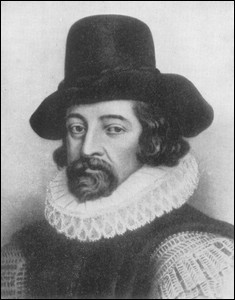
To conclude therefore, let no man upon a weak conceit of sobriety or an ill-applied moderation think or maintain, that a man can search too far, or be too well studied in the book of God's word, or in the book of God's works; divinity or philosophy: but rather let men endeavour an endless progress or proficience in both; only let men beware that they apply both to charity, and not to swelling; to use, and not to ostentation; and again, that they do not unwisely mingle or confound these learnings together.


Francis Bacon, Advancement of Learning, 1605

Tuesday, April 5, 2011

Understanding Poetry

Because poetry--like all the arts--involves this kind of experiential knowledge, we miss the value of poetry if we think of its characteristic knowledge as consisting of "messages," statements, snippets of doctrine. The knowledge that poetry yields is available to us only if we submit ourselves to the massive, and subtle, impact of the poem as a whole. We have access to this special kind of knowledge only by participating in the drama of the poem, apprehending the form of the poem. What in this context do we mean by form? To create a form is to find a way to contemplate, and perhaps to comprehend, our human urgencies. Form is the recognition of fate made joyful, because made comprehensible.


Cleanth Brooks and Robert Penn Warren,
Understanding Poetry,
1960

Saturday, April 2, 2011

The Joyce of McLuhan Studies

He [Marshall McLuhan] was never reticent about the debt he owed to Joyce in particular, and frequently uttered and published such statements as this: 'Nobody could pretend serious interest in my work who is not completely familiar with all the works of James Joyce and the French symbolists.' Such statements were intended to be taken quite literally: a full appreciation of McLuhan's work is impossible without the sort of perceptual training that such familiarity instils. ... He once remarked to me, as I know he did to many others, that his work on media and culture was, in the main, 'applied Joyce.'


Eric McLuhan, The Role of Thunder in Finnegans Wake, 1997

Thursday, March 31, 2011

Technological Determinism

The consequences for literature that stem from major changes in technology are only inevitable to the extent that they are unforeseen. Determinism is the result of the behavior of those who are determined to ignore what is happening around them. Recognition of the psychic and social consequences of technological change makes it possible to neutralize the effects of innovation. If we maintain lively dialogue with, and among, the technologies, we can enlist them on the side of traditional values instead of watching those values disappear while we play the helpless bystanders.


Marshall McLuhan, Letters of Marshall McLuhan

Tuesday, March 29, 2011

What the Public Wants

Nobody wants a motorcar until there are motorcars, and nobody is interested in TV till there are TV programs. This power of technology to create its own world of demand is not independent of technology being first an extension of our own bodies and senses.


Once we have surrendered our senses and nervous systems to the private manipulation of those who would try to benefit from taking a lease on our eyes and ears and nerves, we don't really have any rights left. Leasing our eyes and ears and nerves to commercial interests is like handing over the common speech to a private corporation, or like giving the earth's atmosphere to a company as a monopoly.


Marshall McLuhan, Understanding Media, 1964

Friday, March 25, 2011

Education as Armour

For we let our young men and women go out unarmed, in a day when armour was never so necessary. By teaching them all to read, we have left them at the mercy of the printed word. By the invention of the film and the radio, we have made certain that no aversion to reading shall secure them from the incessant battery of words, words, words. They do not know that the words mean; they do not know how to ward them off or blunt their edge or fling them back; they are a prey to words in their emotions instead of being the masters of them in their intellects. We who were scandalised in 1940 when men were sent to fight armoured tanks with rifles, are not scandalised when young men and women are sent into the world to fight massed propaganda with a smatteirng of "subjects"; and when whole classes and whole nations become hypnotised by the arts of the spell-binder, we have the impudence to be astonished.


Dorothy Sayers, The Lost Tools of Learning, 1947

Wednesday, March 23, 2011

The Wild Broncos of Technology

Harnessing the Tennessee, Missouri, or Mississippi is kid stuff compared with curbing the movie, press, or television to human ends. The wild broncos of technological culture have yet to find their busters or masters. They have found only their P.T. Barnums.


Marshall McLuhan
Explorations in Communication
1966

Pattern Recognition and a New Religion

Suppose, then, that we view recycling as akin to a religious practice, an organized expression of widely held ecological values. The language and symbolism of recycling support this view. Any church needs ritual observances, and curbside recycling provides the opportunity for the weekly offering and collection. After collection there is the modern miracle of transubstantiation, as old packages and papers come to life again. In states that have deposits on beverage containers, it is common to speak of the process of redemption.


Frank Ackerman, Why Do We Recycle?
1997

Thursday, March 17, 2011

Second Nature

The new media are not bridges between man and nature: they are nature.


Marshall McLuhan
Explorations in Communication

Friday, March 4, 2011

The Answer of St. Thomas

When we are confronted by the bold fraud dreamt up by men whose confusion and spiritual frustration is the fruit of Satanic pride, the truth that is in us is made alive and lancing; but when a triumphant technology croons the sickly boasts of the advertising men, when the great vaults and vistas of the human soul are obscured by images of silken glamor, and when it is plain that man lives not by bread alone but by toothpaste also, then we need the answer of St. Thomas. It is the answer of moral and intellectual discipline and ardor.


Marshall McLuhan, 
"Education of Free Men in Democracy," 
in St. Louis University Studies in Honor of St. Thomas Aquinas,
1943

Thursday, February 24, 2011

Ends and Education

Every person is by nature capable of determining his or her aims. Anyone who treats a person as the means to an end does violence to the very essence of the other, to what constitutes its natural right. Obviously, we must demand from a person, as a thinking individual, that his or her ends should be genuinely good, since the pursuit of evil ends is contrary to the rational nature of the person. This is also the purpose of education, both the education of children, and the mutual education of adults; it is just that -- a matter of seeking true ends, i.e. real goods as the ends of our actions, and of finding and showing to others the ways to realize them.


Karol Wojtyla, Love and Responsibility, 1981

Friday, February 4, 2011

Theory of Environments

Pavlov was the man who tipped us off that our old mechanical environment and its consequences were yielding to a totally new environment created by an antithetic technology. His discovery about conditioning is quite trivial since all Western men have experienced this for centuries. The portentous discovery he made was that any controlled environment, any man-made environment, is a conditioner that creates non-perceptive somnambulists. The fact that a natural or non-controlled environment has quite different effects upon human perception has long agitated the anthropological world. Anthropologists have been led to study the patterns of culture of native societies and the wonderful results of native environments in shaping native institutions, without any corresponding increase of insight into their own culture.


Marshall McLuhan, War and Peace in the Global Village, 1968

Thursday, January 27, 2011

Thus Spoke Marshall McLuhan

Check this: 


A compilation of videos featuring none other than Marshall McLuhan.


www.marshallmcluhanspeaks.com


Go see and hear the man himself explain his sayings, prophecies, the electric age, television, and his own quirky methods!

Tuesday, January 25, 2011

Truth, Proclamation, and Authenticity of Life in the Digital Age

St. Francis de Sales
The Vatican released yesterday Pope Benedict XVI's message in preparation for the 45th World Communications Day on the occasion of the Feast Day of St. Francis de Sales, the patron saint of journalists. The message, entitled Truth, Proclamation, and Authenticity of Life in the Digital Age encourages the faithful--especially the youth--to thoughtfully examine their own participation in the digital environment for the purpose of effectively proclaiming the Gospel in all areas of life.


Here are some highlights:


In the digital world, transmitting information increasingly means making it known within a social network where knowledge is shared in the context of personal exchanges. The clear distinction between the producer and consumer of information is relativized and communication appears not only as an exchange of data, but also as a form of sharing. This dynamic has contributed to a new appreciation of communication itself, which is seen first of all as dialogue, exchange, solidarity and the creation of positive relations. On the other hand, this is contrasted with the limits typical of digital communication: the one-sidedness of the interaction, the tendency to communicate only some parts of one's interior world, the risk of constructing a false image of oneself, which can become a form of self-indulgence.

Young people in particular are experiencing this change in communication, with all the anxieties, challenges and creativity typical of those open with enthusiasm and curiosity to new experiences in life. Their ever greater involvement in the public digital forum, created by the so-called social networks, helps to establish new forms of interpersonal relations, influences self-awareness and therefore inevitably poses questions not only of how to act properly, but also about the authenticity of one's own being. Entering cyberspace can be a sign of an authentic search for personal encounters with others, provided that attention is paid to avoiding dangers such as enclosing oneself in a sort of parallel existence, or excessive exposure to the virtual world. In the search for sharing, for "friends", there is the challenge to be authentic and faithful, and not give in to the illusion of constructing an artificial public profile for oneself.


For the full message, see catholic.org.


Via: Read Schuchardt, metaphilm.com

Saturday, January 22, 2011

Education and Entertainment

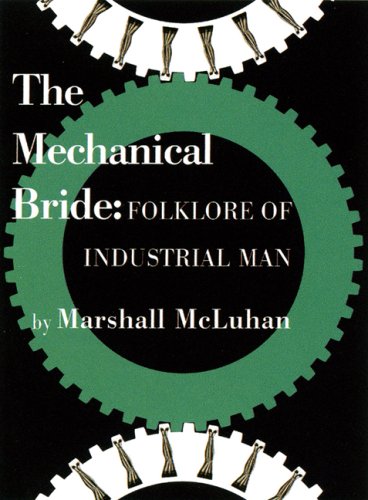
The Mechanical Bride
Few students ever acquire skill in analysis of newspapers. Fewer have any ability to discuss a movie intelligently. To be articulate and discriminating about ordinary affairs and information is the mark of an educated man. It's misleading to suppose there's any basic difference between education and entertainment. This distinction merely relieves people of the responsibility of looking into the matter. It's like setting up a distinction between didactic and lyric poetry on the ground that one teaches, the other pleases. However, it's always been true that whatever pleases teaches more effectively.


Marshall McLuhan, Classroom Without Walls,
Explorations in Communication, 1960

Wednesday, January 19, 2011

The End of Nature

A Beehive of Satellites
The information environment and effects created by the computer are as inaccessible to literate vision as the external world is to the blind. For example, the computer has made possible our satellites which have put a man-made environment around the planet, ending "nature" in the older sense. The new information technology will shortly encompass the entire astral system, harnessing its resources for terrestrial use. The important thing is to realize that electric information systems are live environments in the full organic sense. They alter our feelings and our sensibilities, especially when they are not attended to.


Marshall McLuhan, War and Peace in the Global Village, 1968

Tuesday, January 18, 2011

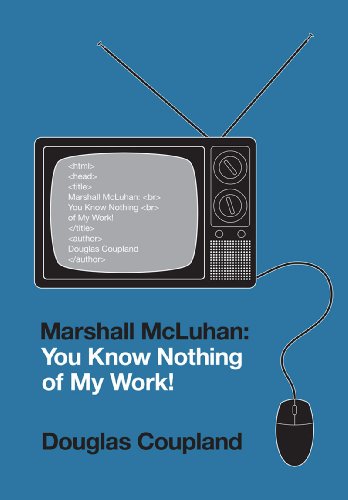
You Know Nothing of My Work!

Check out this excerpt from Nicholas Carr's review of You Know Nothing of My Work!, Douglas Coupland's new biography of McLuhan:


Neither his fans nor his foes saw him clearly. The central fact of McLuhan's life, as Coupland makes clear, was his conversion, at the age of twenty-five, to Catholicism, and his subsequent devotion to the religion’s rituals and tenets. Though he never discussed it, his faith forms the moral and intellectual backdrop to all his mature work. What lay in store, McLuhan believed, was the timelessness of eternity. The earthly conceptions of past, present, and future were, by comparison, of little consequence. His role as a thinker was not to celebrate or denigrate the world but simply to understand it, to recognize the patterns that would unlock history’s secrets and thus provide hints of God’s design. His job was not dissimilar, as he saw it, from that of the artist.


Click here for the rest of Carr's article
and here to buy the book on Amazon.

Monday, January 10, 2011

Discarnate Man and Natural Law

On the telephone, or on the air, man is in every sense discarnate, existing as an abstract image, a figure without a body. The Cheshire cat in Alice in Wonderland  is a kind of parallel to our state. When discarnate, man has no identity, and is not subject to natural law. In fact he has no basis for morals of any sort. As electric information moved at the speed of light, man is a nobody. When deprived of his identity, man becomes violent in divers ways. Violence is the quest for identity. In Canada there is pending a large body of nihilistic legislation dedicated to the ideal of freedom. No-fault divorce is being succeeded by no-fault murder!


Letter to Clare Boothe Luce, April 5, 1979, Letters of Marshall McLuhan

Friday, January 7, 2011

The Medium is the Message: Exercise in Gestalt Psychology

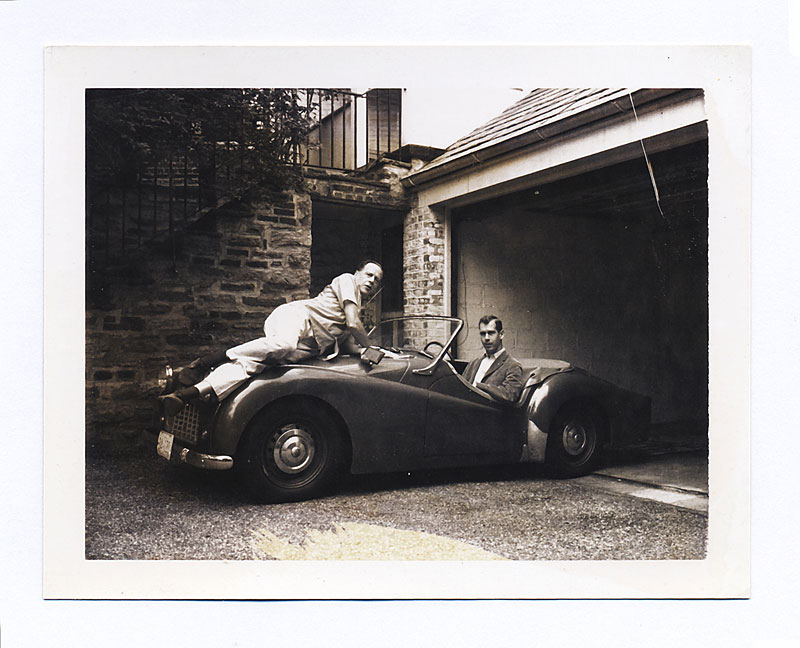
If you speak of the car as a medium, you are no further ahead because the car is no more than a figure detaching itself from a service environment of expressways, oil companies, automobile assembly lines, etc. The real medium, in the case of the car, is the totality of services it creates, or, better yet, the huge change that it creates in the human community. The car as the figure is not the message.


For North Americans, the hidden ground, the real message, of the car is what it does with our sense of privacy. The effect is different in Europe, but the car for us has been largely created to insure our privacy; in other words, the car's message is privacy, intimacy, and solitude. Privacy is made possible by the large network of highways, the biggest architectural structure in the history of the world which, by contrast, makes the pyramids and the Great Wall of China seem small. The car itself is no more than a figure in this service environment.


Marshall McLuhan, The Medium and the Light, Second Conversation with Pierre Babin, 1977

Tuesday, January 4, 2011

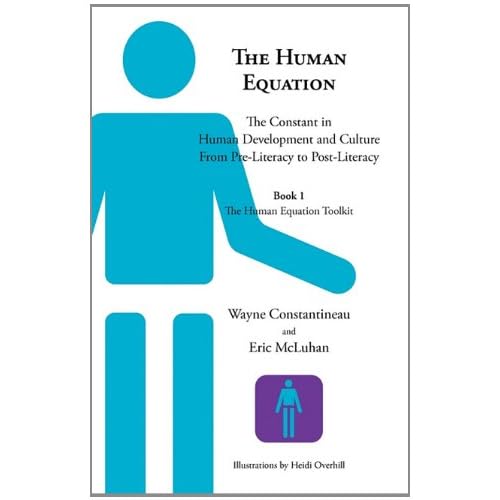
The Human Equation

From Eric McLuhan:
The Human Equation is out!
Here is the URL: It is offered through Amazon (or you can order directly from the publisher, BPS Books).

The Human Equation is a completely new and different approach to the study of media and technologies. It does not rely on any previous theory of media or school of understandings about them. No technical expertise is necessary.

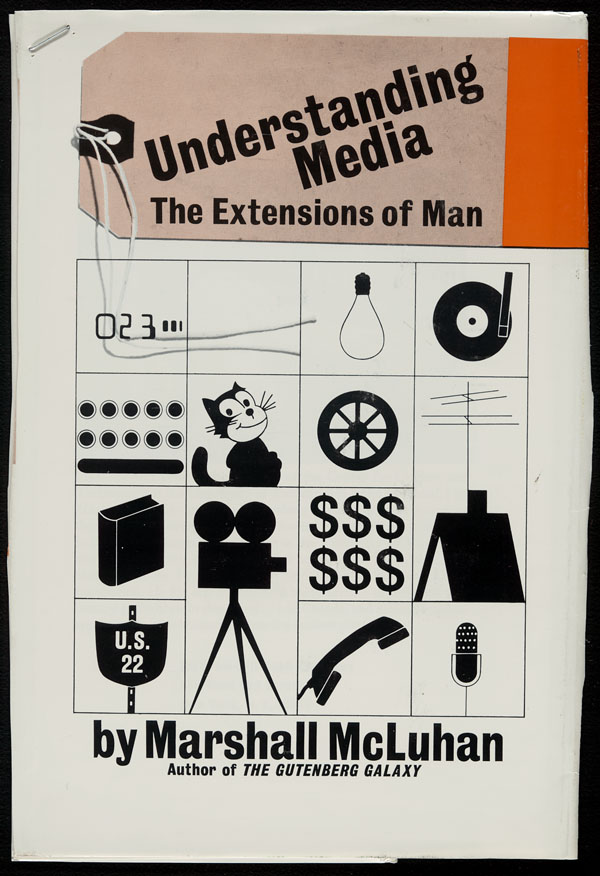
We begin with the announcement, in Understanding Media: The Extensions of Man, that all media and technologies have their origins as extensions of the user's body and faculties, The Human Equation examines the process of extending and the various modes of innovation that are possible in each area of technology, given the human body's repertoire of actions and postures. Now, on the centenary of Marshall McLuhan's birth, we have reinvented the study of media in the direction that he pointed to in that seminal work, Understanding Media.

Since this book is being published over the Internet, we have to rely on personal recommendations to get the word out, so please share this with friends and any you know who might be able to use this new approach to media. 

Sunday, January 2, 2011

A Liberal Education

All liberal arts, in both the sciences and the humanities, are animated by the fundamental human desire to know, the fulfillment of which is a good, even if it provides no economic or political benefit whatsoever. An education for economic productivity and political utility alone is an education for slaves, but an education for finding, collecting and communicating reality is an education for free people, people free to know what is so. Remember, knowing the real is a good before it is a power.


Scott Crider, The Office of Assertion, 2005