All this information and more has overtly, osmotically, or perhaps inadvertently damaged a collective sense of time that has been working well enough since the Industrial Revolution and the rise of the middle classes. This "timesickness" is probably what killed the economy, and God only knows what it's up to next. Everywhere we look, people are making online links--to conspiracy, porn, and gossip sites; to medical data sites and genetics sites; to baseball sites and sites for Fiestaware collectors; to sites where they can access free movies and free TV, arrange hookups with old flames or taunt old enemies--and time has begun to erase the twentieth century way of structuring one's day and locating one's sense of community. People are now doing their deepest thinking and making their most emotionally charged connections with people around the planet at all times of the day. Geography has become irrelevant. Our online phantom world has become the new us. We create complex webs of information and people who support us, and yet they are fleeting, so tenuous. Time speeds up and then it begins to shrink. Years pass by in minutes. Life becomes that strange experience in which you're zooming along a freeway and suddenly realize that you haven't paid any attention to driving for the last fifteen minutes, yet you're still alive and didn't crash. The voice inside your head has become a different voice. It used to be "you." Now your voice is that of a perpetual nomad drifting along a melting landscape, living day to day, expecting everything and nothing.
Douglas Coupland, Marshall McLuhan:
You Know Nothing of My Work!
2009
Friday, April 29, 2011
Thursday, April 21, 2011
The Self Mover: Automobile
| Source |
Donald Theall, James Joyce's Techno-Poetics, 1997
Monday, April 18, 2011
The Medium is the Message
On turning to the 'Work in Progress' [Finnegans Wake] we find that the mirror is not so convex. Here is direct expression--pages and pages of it. And if you don't understand it, Ladies and Gentlemen, it is because you are too decadent to receive it. You are not satisfied unless the form is so strictly divorced from the content that you can comprehend the one almost without bothering to read the other. ... Here form is content, content is form. You complain that this stuff is not written in English. It is not written at all. It is not to be read--or rather it is not only to be read. It is to be looked at and listened to. His writing is not about something; it is that something itself.
Samuel Beckett, "Dante... Bruno. Vico.. Joyce,"
in Our Exagmination Round His Factification
For Incamination of Work in Progress, 1929
Samuel Beckett, "Dante... Bruno. Vico.. Joyce,"
in Our Exagmination Round His Factification
For Incamination of Work in Progress, 1929
Saturday, April 16, 2011
Beyond Media
In the 1960s Marshall McLuhan came to be for the populace the prophet of the death of the book, since many commentators transformed his observations on these problems into an unqualified prediction and endorsement of that death. What actually has been implied as taking place in this process is not the movement beyond a particular medium, such as the book or print, but a movement beyond the very idea of a unique communication medium. The appearance of new methods of technological production, reproduction, and distribution permitted the possibility of transcending traditionally recognized modes and returning to the original vision of the poetic as a concept which could simultaneously embrace various modes of communication, as in Aristotle's treatment of drama in the Poetics. Joyce represents a monumental movement beyond media--itself a comic commentary on McLuhan and his commentators.
Don Theall, Beyond the Word, 1995
Thursday, April 14, 2011
The Role of Media Ecology in Church History
I recently came across this well-written article by Michael Giobbe from the Media Ecology Association proceedings of 2009. It should be of special interest to those Christians interested in the intersection of faith, media ecology, and ecumenism.
Abstract:
"The leading figures in media ecology—Marshall McLuhan, Walter Ong, Neil Postman, Harold Innis, and Elizabeth Eisenstein—have all commented on the influence of various media environments upon the unfolding of church history. Their observations on the topic, however, have not to date been specifically collected and set into perspective with a view toward understanding more recent developments in that history. In this article, I undertake a preliminary overview of the subject, leading to two conclusions: First, the role of media ecology in church history is more varied, pervasive, and influential than previously thought. Secondly, therefore, by teaching media ecology as a unifying discipline either at the church or seminary level, one could actually deconflict that history, potentially leading to greater unity between church communities."
Full Article: http://www.media-ecology.org/publications/MEA_proceedings/v10/10_How_Wide.pdf
How Wide and How Long,
How High and How Deep:
The Role of Media Ecology in Church History
Abstract:
"The leading figures in media ecology—Marshall McLuhan, Walter Ong, Neil Postman, Harold Innis, and Elizabeth Eisenstein—have all commented on the influence of various media environments upon the unfolding of church history. Their observations on the topic, however, have not to date been specifically collected and set into perspective with a view toward understanding more recent developments in that history. In this article, I undertake a preliminary overview of the subject, leading to two conclusions: First, the role of media ecology in church history is more varied, pervasive, and influential than previously thought. Secondly, therefore, by teaching media ecology as a unifying discipline either at the church or seminary level, one could actually deconflict that history, potentially leading to greater unity between church communities."
Full Article: http://www.media-ecology.org/publications/MEA_proceedings/v10/10_How_Wide.pdf
Sunday, April 10, 2011
The Limits of Knowledge
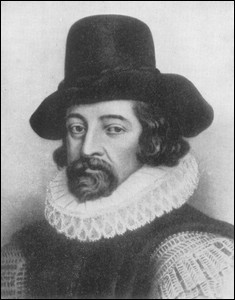
To conclude therefore, let no man upon a weak conceit of sobriety or an ill-applied moderation think or maintain, that a man can search too far, or be too well studied in the book of God's word, or in the book of God's works; divinity or philosophy: but rather let men endeavour an endless progress or proficience in both; only let men beware that they apply both to charity, and not to swelling; to use, and not to ostentation; and again, that they do not unwisely mingle or confound these learnings together.
Francis Bacon, Advancement of Learning, 1605
Tuesday, April 5, 2011
Understanding Poetry
Because poetry--like all the arts--involves this kind of experiential knowledge, we miss the value of poetry if we think of its characteristic knowledge as consisting of "messages," statements, snippets of doctrine. The knowledge that poetry yields is available to us only if we submit ourselves to the massive, and subtle, impact of the poem as a whole. We have access to this special kind of knowledge only by participating in the drama of the poem, apprehending the form of the poem. What in this context do we mean by form? To create a form is to find a way to contemplate, and perhaps to comprehend, our human urgencies. Form is the recognition of fate made joyful, because made comprehensible.
Cleanth Brooks and Robert Penn Warren,
Understanding Poetry,
1960
Cleanth Brooks and Robert Penn Warren,
Understanding Poetry,
1960
Saturday, April 2, 2011
The Joyce of McLuhan Studies
He [Marshall McLuhan] was never reticent about the debt he owed to Joyce in particular, and frequently uttered and published such statements as this: 'Nobody could pretend serious interest in my work who is not completely familiar with all the works of James Joyce and the French symbolists.' Such statements were intended to be taken quite literally: a full appreciation of McLuhan's work is impossible without the sort of perceptual training that such familiarity instils. ... He once remarked to me, as I know he did to many others, that his work on media and culture was, in the main, 'applied Joyce.'
Eric McLuhan, The Role of Thunder in Finnegans Wake, 1997
Subscribe to:
Posts (Atom)