Showing posts with label Education. Show all posts

Sunday, April 10, 2011

The Limits of Knowledge

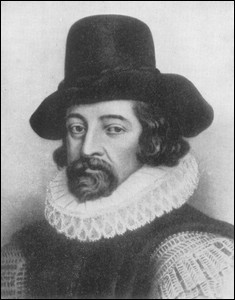
To conclude therefore, let no man upon a weak conceit of sobriety or an ill-applied moderation think or maintain, that a man can search too far, or be too well studied in the book of God's word, or in the book of God's works; divinity or philosophy: but rather let men endeavour an endless progress or proficience in both; only let men beware that they apply both to charity, and not to swelling; to use, and not to ostentation; and again, that they do not unwisely mingle or confound these learnings together.


Francis Bacon, Advancement of Learning, 1605


Friday, March 25, 2011

Education as Armour

For we let our young men and women go out unarmed, in a day when armour was never so necessary. By teaching them all to read, we have left them at the mercy of the printed word. By the invention of the film and the radio, we have made certain that no aversion to reading shall secure them from the incessant battery of words, words, words. They do not know that the words mean; they do not know how to ward them off or blunt their edge or fling them back; they are a prey to words in their emotions instead of being the masters of them in their intellects. We who were scandalised in 1940 when men were sent to fight armoured tanks with rifles, are not scandalised when young men and women are sent into the world to fight massed propaganda with a smatteirng of "subjects"; and when whole classes and whole nations become hypnotised by the arts of the spell-binder, we have the impudence to be astonished.


Dorothy Sayers, The Lost Tools of Learning, 1947

Friday, March 4, 2011

The Answer of St. Thomas

When we are confronted by the bold fraud dreamt up by men whose confusion and spiritual frustration is the fruit of Satanic pride, the truth that is in us is made alive and lancing; but when a triumphant technology croons the sickly boasts of the advertising men, when the great vaults and vistas of the human soul are obscured by images of silken glamor, and when it is plain that man lives not by bread alone but by toothpaste also, then we need the answer of St. Thomas. It is the answer of moral and intellectual discipline and ardor.


Marshall McLuhan, 
"Education of Free Men in Democracy," 
in St. Louis University Studies in Honor of St. Thomas Aquinas,
1943

Thursday, February 24, 2011

Ends and Education

Every person is by nature capable of determining his or her aims. Anyone who treats a person as the means to an end does violence to the very essence of the other, to what constitutes its natural right. Obviously, we must demand from a person, as a thinking individual, that his or her ends should be genuinely good, since the pursuit of evil ends is contrary to the rational nature of the person. This is also the purpose of education, both the education of children, and the mutual education of adults; it is just that -- a matter of seeking true ends, i.e. real goods as the ends of our actions, and of finding and showing to others the ways to realize them.


Karol Wojtyla, Love and Responsibility, 1981

Saturday, January 22, 2011

Education and Entertainment

The Mechanical Bride
Few students ever acquire skill in analysis of newspapers. Fewer have any ability to discuss a movie intelligently. To be articulate and discriminating about ordinary affairs and information is the mark of an educated man. It's misleading to suppose there's any basic difference between education and entertainment. This distinction merely relieves people of the responsibility of looking into the matter. It's like setting up a distinction between didactic and lyric poetry on the ground that one teaches, the other pleases. However, it's always been true that whatever pleases teaches more effectively.


Marshall McLuhan, Classroom Without Walls,
Explorations in Communication, 1960

Sunday, January 2, 2011

A Liberal Education

All liberal arts, in both the sciences and the humanities, are animated by the fundamental human desire to know, the fulfillment of which is a good, even if it provides no economic or political benefit whatsoever. An education for economic productivity and political utility alone is an education for slaves, but an education for finding, collecting and communicating reality is an education for free people, people free to know what is so. Remember, knowing the real is a good before it is a power.


Scott Crider, The Office of Assertion, 2005

Wednesday, December 29, 2010

The Business of School

The principal argument is that teachers are not competent to serve as priests, psychologists, therapists, political reformers, social workers, sex advisers, or parents. That some teachers might wish to do so is understandable, since in this way they may elevate their prestige. That some would feel it necessary to do so is also understandable, since many social institutions, including the family and the church, have deteriorated in their influence. But unprepared teachers are not an improvement on ineffective social institutions; the plain fact is that there is nothing in the background or education of teachers that qualifies them to do what other institutions are supposed to do. It should be clear, by the way, that in this argument the phrase "unprepared teachers," does not mean that teachers cannot do their work. It means they cannot do everyone's work.


Neil Postman, The End of Education, 1995

Monday, December 27, 2010

The Embodied Page

In a tradition of one and a half millenia, the sounding pages are echoed by the resonance of the moving lips and tongue. The reader's ears pay attention, and strain to catch what the reader's mouth gives forth. In this manner the sequence of letters translates directly into body movements and patterns nerve impulses. The lines are a sound track picked up by the mouth and voiced by the reader for his own ear. By reading, the page is literally embodied, incorporated.


The modern reader conceives of a page as a plate that inks the mind, and of the mind as a screen onto which the page is projected and from which, at a flip, it can fade. For the monastic reader, whom Hugh addresses, reading is a much less phantasmagoric and much more carnal activity: the reader understands the lines by moving to their beat, remembers them by recapturing their rhythm, and thinks of them in terms of putting them into his mouth and chewing. No wonder pre-university monasteries are described to us in various sources as the dwelling places of mumblers and munchers.


Ivan Illich, In the Vineyard of the Text, 1993

Thursday, December 16, 2010

The Internal Palace

The one most common method used by the Greeks to achieve this purpose was the mental construction of a memory palace. ... To become the student of a reputable teacher, the pupil had to prove that he was at home and at ease in some vast architecture that existed only in his mind, and within which he could move at an instant to the spot of his choice. Each school had its own rules according to which this edifice had to be constructed. It had to contain several visually distinct classes of features such as columns, angles, rafters, rooms, archways, niches, and thresholds.


Ivan Illich, In the Vineyard of the Text, 1993

Saturday, December 11, 2010

Reading in the Middle Ages

There are some of a dozen rules of a general character that Hugh [of St. Victor] gives for the shaping of those habits which the reader must acquire so that his striving lead him to wisdom, rather than to the accumulation of knowledge pursued for the purpose of showing off. The reader is one who has made himself into an exile in order to concentrate his entire attention and desire on wisdom, which thus becomes the hoped-for home.


Ivan Illich, In the Vineyard of the Text, 1996

Saturday, November 13, 2010

The End of Education, pt. III

What students do in the classroom is what they learn (as Dewey would say), and what they learn to do is the classroom's message (as McLuhan would say). Now, what is it that students do in the classroom? Well, mostly, they sit and listen to the teacher. Mostly, they are required to believe in authorities, or at least pretend to such belief when they take tests. Mostly, they are required to remember. They are almost never required to make observations, formulate definitions, or perform any intellectual operations that go beyond repeating what someone else says is true.


Neil Postman and Charles Weingartner, Teaching as a Subversive Activity, 1969

Thursday, October 28, 2010

The End of Education, pt. II

Education plays, and will continue to play, a much more important part in government than physical and exterior force. Force is a passing and precarious thing, whereas to get inside a person' mind and change his very personality is the effective way of reducing him and making him yours. Merely to chain him up like a dog or a slave is meaningless. To kill him is equally meaningless. It is by taking him when he is very young, and educating him, that you can secure him to yourself.


--Wyndham Lewis, The Art of Being Ruled, 1926

Wednesday, October 20, 2010

On Aphorism

But the writing in aphorisms hath many excellent virtues, whereto the writing in Method doth not approach. For first, it trieth the writer, whether he be superficial or solid: for Aphorism, except they should be ridiculous, cannot be made but of the pith and heart of sciences; for discourse of illustration is cut off; recitals of examples are cut off; discourse of connexion and order is cut off; descriptions of practice are cut off. So there remaineth nothing to fill the aphorisms but some good quantity of observation: and therefore no man can suffice, nor in reason will attempt, to write aphorisms, but he that is sound and grounded. ... And lastly, Aphorisms, representing a knowledge broken, do invite men to inquire farther; whereas Method, carrying the show of a total, do secure men, as if they were at farthest.


Francis Bacon, The Advancement of Learning, 1605

Thursday, October 7, 2010

The End of Education

Q. Do you think it is our job as educationists to increase the capacity of the student to come to grips with this new experience of a new technology?


A. They are totally at grips with it and what we want to give them is some detachment.


--Marshall McLuhan, Education in an Electronic Age,
in The Best of Times/The Worst of Times:
Contemporary Issues in Canadian Education, 1970

Saturday, October 2, 2010

Educational Hypocrisy

If you wanted the kids to withdraw from involvement in the new electric environment, you should just programme it in your school system as necessary for examinations. Put the hit parade on the examination and all the comic books and all the movies and all the TV shows and examine every week in them and you will find a total desertion of the whole enterprise. If there is anything but hypocrisy in our protest about the vulgarity of our programming, we would do this. We are pure hypocrites. We can stop them from looking at every one of those shows by the simple gesture of using our school system. It works for Shakespeare; why shouldn't it work for Bonanza?


--Marshall McLuhan, Education in an Electronic Age,
in  The Best of Times/The Worst of Times:
Contemporary Issues in Canadian Education, 1970