Showing posts with label Religion. Show all posts

Tuesday, December 27, 2011

A Wayfarer and a Pilgrim

But since it seems appropriate to say a word about The Moviegoer, it is perhaps not too farfetched to compare it in one respect with the science of pathology. Its posture is the posture of the pathologist with his suspicion that something is wrong. There is time for me to say only this: that the pathology in this case has to do with the loss of individuality and the loss of identity at the very time when words like the "dignity of the individual" and "self-realization" are being heard more frequently than ever. Yet the patient is not mortally ill. On the contrary, it speaks well for the national health that pathologists of one sort and another are tolerated and even encouraged.


In short, the book attempts a modest restatement of the Judeo-Christian notion that man is more than an organism in an environment, more than an integrated personality, more even than a mature and creative individual, as the phrase goes. He is a wayfarer and a pilgrim.


Walker Percy
Accepting the National Book Award
for The Moviegoer, 1962

Monday, May 30, 2011

McLuhan and the Eyes of Faith

I wouldn't have seen it if I hadn't believed it.
Marshall McLuhan
Marshall didn't publicly discuss his religion. His theory was that people who can see don't walk around saying, "I'm seeing things" all day. They simply see the world. And so, with religion, it was simply there with him. This unwillingness to discuss religion caused him much trouble. Some people perceived it as arrogance. Some people saw it is as weakness and shirking. Some people saw it was outdated and ridiculous. Some saw it as a wasted chance to make converts.

Douglas Coupland, Marshall McLuhan:
You Know Nothing of My Work!
2009

Thursday, April 21, 2011

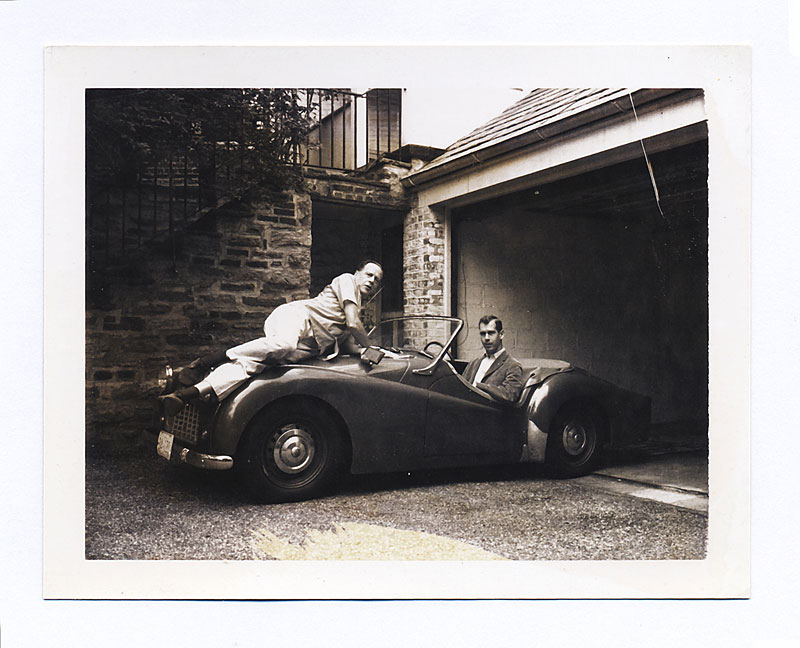
The Self Mover: Automobile

Source
In the spring of 1928 when the Swiss art historian Carola Giedion-Welcker first visited James at his flat in Paris, their conversation included a highly suggestive interchange about technology. She reports that Joyce asked, "Tell me what sort of an idea do you think the word 'automobile' would have aroused in the middle ages," and without waiting for a reply, he continued, "Certainly only that of a divine being, a self mover, thus a god." ... Recollecting that original conversation, she observes that there is a cultural project central to the Wake by which, "from a key word and the conceptions it aroused, Joyce wanted to crystalize a cultural state, or better yet the cultural crisis of a century. For god and technology had moved critically close to each other.


Donald Theall, James Joyce's Techno-Poetics, 1997

Tuesday, January 25, 2011

Truth, Proclamation, and Authenticity of Life in the Digital Age

St. Francis de Sales
The Vatican released yesterday Pope Benedict XVI's message in preparation for the 45th World Communications Day on the occasion of the Feast Day of St. Francis de Sales, the patron saint of journalists. The message, entitled Truth, Proclamation, and Authenticity of Life in the Digital Age encourages the faithful--especially the youth--to thoughtfully examine their own participation in the digital environment for the purpose of effectively proclaiming the Gospel in all areas of life.


Here are some highlights:


In the digital world, transmitting information increasingly means making it known within a social network where knowledge is shared in the context of personal exchanges. The clear distinction between the producer and consumer of information is relativized and communication appears not only as an exchange of data, but also as a form of sharing. This dynamic has contributed to a new appreciation of communication itself, which is seen first of all as dialogue, exchange, solidarity and the creation of positive relations. On the other hand, this is contrasted with the limits typical of digital communication: the one-sidedness of the interaction, the tendency to communicate only some parts of one's interior world, the risk of constructing a false image of oneself, which can become a form of self-indulgence.

Young people in particular are experiencing this change in communication, with all the anxieties, challenges and creativity typical of those open with enthusiasm and curiosity to new experiences in life. Their ever greater involvement in the public digital forum, created by the so-called social networks, helps to establish new forms of interpersonal relations, influences self-awareness and therefore inevitably poses questions not only of how to act properly, but also about the authenticity of one's own being. Entering cyberspace can be a sign of an authentic search for personal encounters with others, provided that attention is paid to avoiding dangers such as enclosing oneself in a sort of parallel existence, or excessive exposure to the virtual world. In the search for sharing, for "friends", there is the challenge to be authentic and faithful, and not give in to the illusion of constructing an artificial public profile for oneself.


For the full message, see catholic.org.


Via: Read Schuchardt, metaphilm.com

Saturday, December 25, 2010

The Varieties of Religious Experience

As the discussion proceeds, important distinctions are made among the different meanings of "belief," but at some point it becomes far from asinine to speak of the god of Technology--in the sense that people believe technology works, that they rely on it, that it makes promises, that they are bereft when denied access to it, that they are delighted when they are in its presence, that for most people it works in mysterious ways, that they condemn people who speak against it, that they stand in awe of it, and that, in the born-again mode, they will alter their lifestyles, their schedules, their habits, and their relationships to accommodate it. If this be not a form of religious belief, what is?


Neil Postman, The End of Education, 1995