Showing posts with label Grammar. Show all posts

Friday, December 7, 2012

McLuhan's Literary Landscape

As soon as you adjust to McLuhan's literary landscape, you will start to look at things in a different way; you will see them as they truly are and learn how to see through them. You will see the grammarian through the guru, literature through technology, and the humanities through media. You will see through the literary origins of McLuhan's media studies, and, from there, you will set off on new explorations of your own. You will learn to apply McLuhan and understand why literature is not a subject but a function inseparable from our communal existence.

--Elena Lamberti, Marshall McLuhan's Mosaic, 2012

Thursday, October 20, 2011

McLuhan's Three Books

With our accelerating cascade of new media it is borne upon us that each represents not an appendix to but a complete retranslation of the Book of the World, and of the reader. As W.B. Yeats sang, in 'Sailing to Byzantium': 


Once out of nature I shall never take
My bodily form from any natural thing,
But such a form as Grecian goldsmiths make
Of hammered gold and gold enamelling...
Vico simply had not distinguished between first and second nature for separate study: nothing in his experience suggested such a distinction would be of any use. Second nature is nature made and remade by man as man remakes himself with his extensions. Separate them: the first is the province of traditional grammar; the second, that of Bacon, Vico, and Laws of Media.


Eric and Marshall McLuhan
Laws of Media 


Tuesday, June 7, 2011

Finding Your Way in a Sea of Information

The goal of science and the arts and of education for the next generation must be to decipher not the genetic but the perceptual code. In a global information environment, the old pattern of education in answer-finding is of no avail: one is surrounded by answers, millions of them, moving and mutating at electric speed. Survival and control will depend on the ability to probe and to question in the proper way and place. As the information that constitutes the environment is perpetually in flux, so the need is not for fixed concepts but rather for the ancient skill of reading that book, for navigating through an ever uncharted and unchartable milieu. Else we will have no more control of this technology and environment than we have of the wind and the tides.


Marshall and Eric McLuhan
Laws of Media,
1988

Tuesday, May 24, 2011

Media as Cliché as Probe

Any extension of man's sensory life such as the dog, or the motor car, imprints numerous clichés on any language, extending its range of probe. All media of communications are clichés serving to enlarge man's scope of action, his patterns of association and awareness. These media create environments that numb our powers of attention by sheer pervasiveness. The limits of our awareness of these forms does not limit their action upon our sensibilities. Just as the rim-spin of the planet arranges the components of high- and low-pressure areas, so the environments created by linguistic and other extensions of our powers are constantly creating new climates of thought and feeling. Since the resulting symbolic systems are numerous, they are in perpetual interplay, creating a kind of sound-light show on an ever-increasing scale.


Marshall McLuhan
From Cliché to Archetype
1970

Sunday, April 10, 2011

The Limits of Knowledge

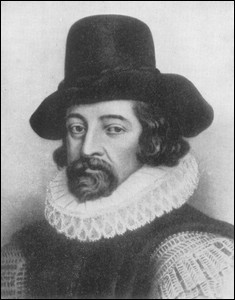
To conclude therefore, let no man upon a weak conceit of sobriety or an ill-applied moderation think or maintain, that a man can search too far, or be too well studied in the book of God's word, or in the book of God's works; divinity or philosophy: but rather let men endeavour an endless progress or proficience in both; only let men beware that they apply both to charity, and not to swelling; to use, and not to ostentation; and again, that they do not unwisely mingle or confound these learnings together.


Francis Bacon, Advancement of Learning, 1605

Tuesday, April 5, 2011

Understanding Poetry

Because poetry--like all the arts--involves this kind of experiential knowledge, we miss the value of poetry if we think of its characteristic knowledge as consisting of "messages," statements, snippets of doctrine. The knowledge that poetry yields is available to us only if we submit ourselves to the massive, and subtle, impact of the poem as a whole. We have access to this special kind of knowledge only by participating in the drama of the poem, apprehending the form of the poem. What in this context do we mean by form? To create a form is to find a way to contemplate, and perhaps to comprehend, our human urgencies. Form is the recognition of fate made joyful, because made comprehensible.


Cleanth Brooks and Robert Penn Warren,
Understanding Poetry,
1960

Wednesday, November 17, 2010

Acoustic McLuhan

I recently posted a clip of an interview with Marshall McLuhan in which he explained his conversion to Catholicism (link). The clip came from an interview with Nina Sutton in 1975, which the Library and Archives of Canada have put out on the web (link). Unfortunately, they have the interview available only as Windows Media files, so here is a link to the rest of the clips you can find on their website:


Interview with Nina Sutton


The topics include:
+The relationship between "the medium is the message" and the figure/ground concept,
+The influence of New Criticism on McLuhan media studies,
+The relationship of poetry and media,
+The Press,
+Visual and Acoustic Space.


Be sure to check it out, there are some rare gems here!

Monday, October 25, 2010

Grammar and the Laws of Media

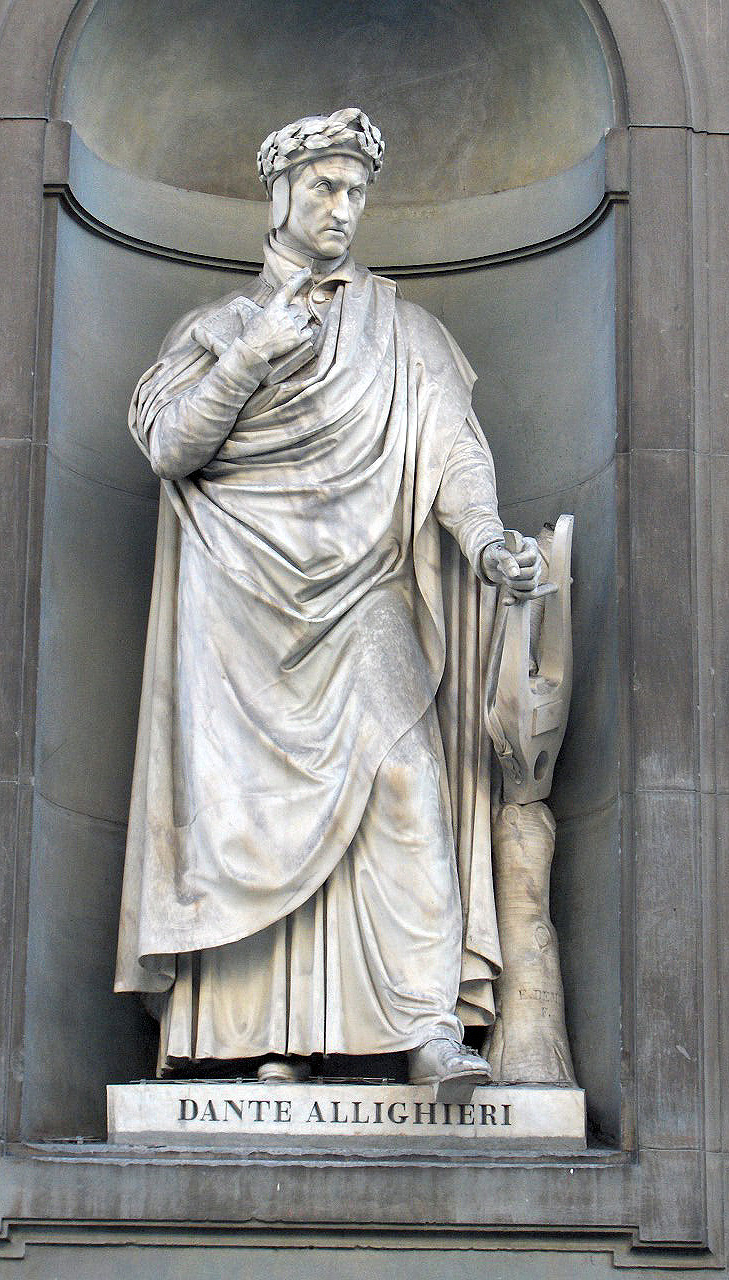
The very events of history are a gigantic and complex statement to which the methods of grammatical exegesis are applicable; and this point of view is as helpful for the understanding of Dante as of Milton, not to mention subjects of greater extent.


Marshall McLuhan, The Classical Trivium, 2006

Saturday, September 25, 2010

The Business of Art

The doctrine of names is, of course, the doctrine of essence and not a naive notion of oral terminology. The scriptural exegetists will hold, as Francis Bacon held, that Adam possessed metaphysical knowledge in a very high degree. To him the whole of nature was a book which he could read with ease. He lost his ability to read this language of nature as a result of the fall; and Solomon alone of the sons of men has ever recovered the power to read the book of nature. The business of art is, however, to recover the knowledge of that language which once man held by nature.


Marshall McLuhan, The Classical Trivium, 2006

Thursday, September 16, 2010

On Two Natures

Aristotle first noted that the Greek invention of Nature was made possible when they had left behind a savage or barbaric state (first nature) by putting on an individualized and civilized one (second nature). And A.T.W. Simeons has discussed at length how disruptive the second nature has been to the first. Made discarnate by our electric information media, the west is furiously at work retrieving its obsolesced organic first nature in a spectrum of new aesthetic modes, from feminism to phenomenology. As our second nature consists entirely in our artifacts and extensions and the grounds and narcoses they impose, their etymologies are all to be found in first nature, the wild body.


Marshall and Eric McLuhan, Laws of Media, 1988