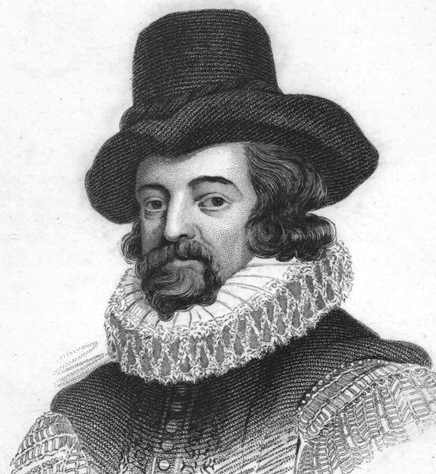
To conclude therefore, let no man upon a weak conceit of sobriety or an ill-applied moderation think or maintain, that a man can search too far, or be too well studied in the book of God's word, or in the book of God's works; divinity or philosophy: but rather let men endeavour an endless progress or proficience in both; only let men beware that they apply both to charity, and not to swelling; to use, and not to ostentation; and again, that they do not unwisely mingle or confound these learnings together.
Francis Bacon, Advancement of Learning, 1605
Showing posts with label Francis Bacon. Show all posts
Sunday, April 10, 2011
Wednesday, October 20, 2010
On Aphorism
But the writing in aphorisms hath many excellent virtues, whereto the writing in Method doth not approach. For first, it trieth the writer, whether he be superficial or solid: for Aphorism, except they should be ridiculous, cannot be made but of the pith and heart of sciences; for discourse of illustration is cut off; recitals of examples are cut off; discourse of connexion and order is cut off; descriptions of practice are cut off. So there remaineth nothing to fill the aphorisms but some good quantity of observation: and therefore no man can suffice, nor in reason will attempt, to write aphorisms, but he that is sound and grounded. ... And lastly, Aphorisms, representing a knowledge broken, do invite men to inquire farther; whereas Method, carrying the show of a total, do secure men, as if they were at farthest.
Francis Bacon, The Advancement of Learning, 1605
Saturday, September 25, 2010
The Business of Art
The doctrine of names is, of course, the doctrine of essence and not a naive notion of oral terminology. The scriptural exegetists will hold, as Francis Bacon held, that Adam possessed metaphysical knowledge in a very high degree. To him the whole of nature was a book which he could read with ease. He lost his ability to read this language of nature as a result of the fall; and Solomon alone of the sons of men has ever recovered the power to read the book of nature. The business of art is, however, to recover the knowledge of that language which once man held by nature.
Marshall McLuhan, The Classical Trivium, 2006
Subscribe to:
Posts (Atom)