Tuesday, April 2, 2013
Introducing Second Nature Journal
SECOND NATURE
I'm proud to announce that I'll be moving over to a new site, Second Nature Journal, to focus on creating a place for people to dialogue about technology and media in light of the Christian tradition. The idea is to bring the people thinking and talking about this to one place with the hope of encouraging more discussion. My colleague, Brantly Millegan and I will be hard at work looking for the best content out there, and we will be accepting multi-media material (articles, visual art, poetry, music, videos, etc).
Feel free to kick around at Resident Alien to get an idea of what I see as the important strains in media ecology and then get over to Second Nature to see the best new material on the subject.
You can see my first article there, Thinking Trivially About Radical Orthodoxy, which traces the influence of the Church Fathers in McLuhan's thought and those scholars who identify as "radically orthodox."
Our press release:
April 1st, 2013 – The new online journal Second Nature officially launches today and plans to be the definitive place for critical thinking about technology and new media in light of the Christian tradition, with written articles, images, videos, poetry, and links.
The journal’s co-founders are Benjamin Robertson, Brantly Millegan, and Read Mercer Schuchardt. Robertson and Millegan both studied under Schuchardt, Associate Professor of Communication at Wheaton College (IL). Robertson and Millegan serve as the journal’s Editors, and Schuchardt is the Chairman of the Editorial Board. The other members of the Editorial Board are: Juliette Aristides, Eric Brende, Peter K. Fallon, Geraldine Forsberg, T. David Gordon, Shane Hipps, Arthur W. Hunt III, Eric McLuhan, and Brett T. Robinson. The board members represent a wide range of academic and professional backgrounds, denominational affiliations, and interests in the subject. For bios and pictures, see the journal’s About page.
The idea of the journal came about after Millegan wrote the article ‘Of Mics and Men‘, and couldn’t find a proper publication in which to publish it. In talking to Robertson and Schuchardt, they decided to form Second Nature. “Everybody knows new technologies like the Internet and smartphones are radically transforming our world, ” Millegan said. “So what does the Christian tradition have to offer to help us to think critically about these powerful tools, their meaning and their proper use? That’s one of the driving questions of the journal.”
The journal is now accepting submissions, which may come in the form of written pieces, images, or videos. While submissions should adhere to the general boundaries set by the journal’s description, there is no religious affiliation required for those submitting pieces. See the journal’s Contact page for full submission guidelines.
For launch, the journal has six published pieces: one painting and five written articles, on topics ranging from the eight characteristics of mass audiences created by electronic media, to how the Internet is reuniting families previously kept apart as a result of other technological innovations. The journal plans to publish a new piece every few weeks, bridging the publication schedule between a quarterly journal and a weekly website.
The journal also has a blog, which will be updated weekly with relevant news or other items of interest related to the journal’s topic. Examples of recent blog posts include: an article about an Italian priest who recently smashed a TV on the altar of his church during Mass to remind his parishioners to not become enslaved to technology; pictures from a new tumblr that gives life advice from machines; and a set of videos in which a person tests to see why people are comfortable with security cameras recording them but get very nervous when a person holding a camera does the same thing.
The journal hopes to eventually offer an annual print edition, conferences, and seminars.
The journal may be followed on Twitter, Facebook, Google+, by email, or with its RSS feed. The journal’s web address is http://secondnaturejournal.com.
All questions, comments, media inquiries, and submissions should be directed to contact@secondnaturejournal.com.


Friday, December 7, 2012
McLuhan's Literary Landscape
 As soon as you adjust to McLuhan's literary landscape, you will start to look at things in a different way; you will see them as they truly are and learn how to see through them. You will see the grammarian through the guru, literature through technology, and the humanities through media. You will see through the literary origins of McLuhan's media studies, and, from there, you will set off on new explorations of your own. You will learn to apply McLuhan and understand why literature is not a subject but a function inseparable from our communal existence.
--Elena Lamberti, Marshall McLuhan's Mosaic, 2012
Sunday, December 2, 2012
The Heart of Existence
Technical civilization is man’s conquest of space. It is a triumph frequently achieved by sacrificing an essential ingredient of existence, namely, time. In technical civilization, we expend time to gain space. To enhance our power in the world of space is our main objective. Yet to have more does not mean to be more. The power we attain in the world of space terminates abruptly at the borderline of time. But time is the heart of existence.
--Abraham Heschel, The Sabbath, 1951.
Tuesday, December 27, 2011
A Wayfarer and a Pilgrim

In short, the book attempts a modest restatement of the Judeo-Christian notion that man is more than an organism in an environment, more than an integrated personality, more even than a mature and creative individual, as the phrase goes. He is a wayfarer and a pilgrim.
Walker Percy
Accepting the National Book Award
for The Moviegoer, 1962
Wednesday, November 2, 2011
A Culture of Death
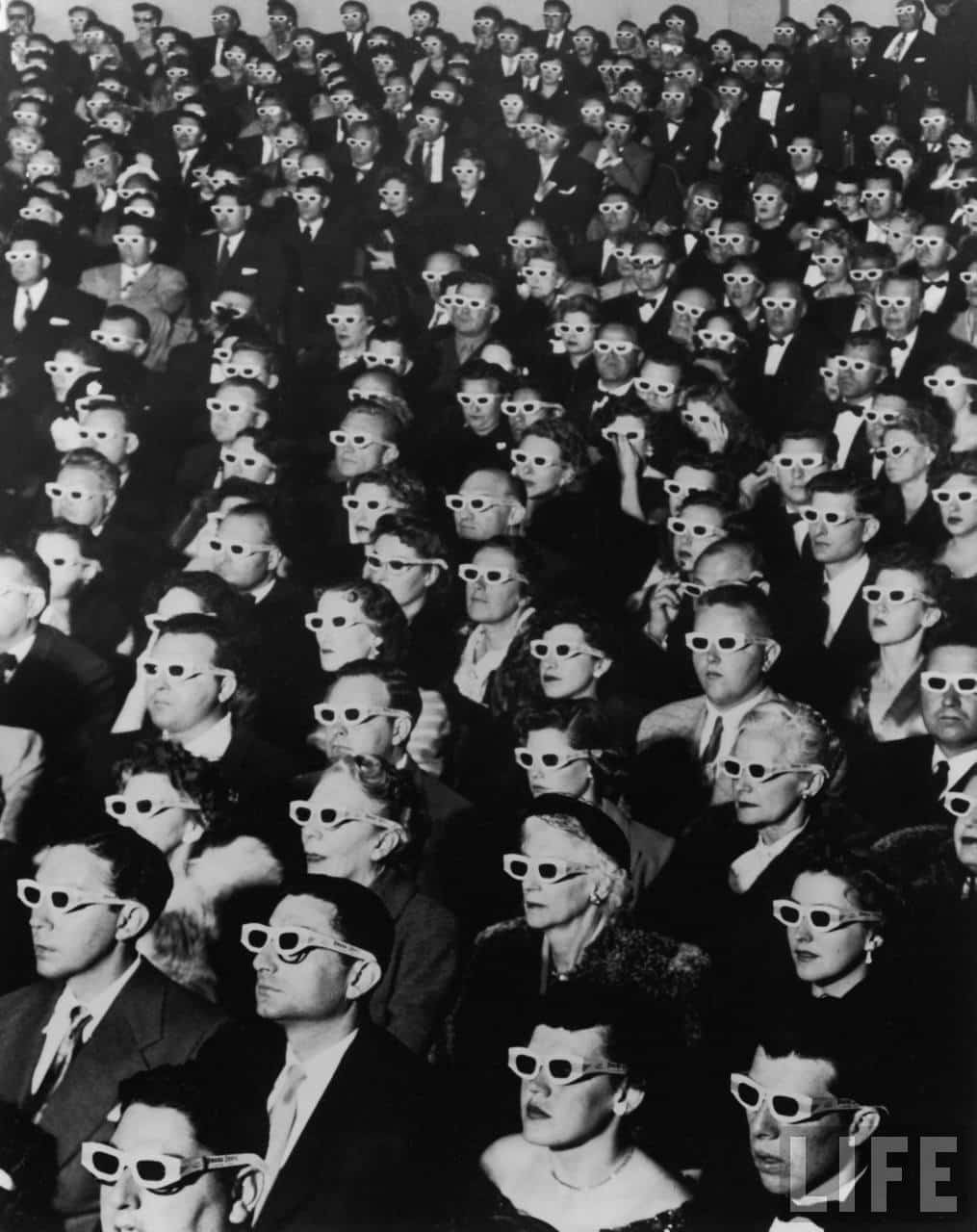
Wherever one looks, one
encounters this same intent: to
restructure society without community.
Guy Debord
Society of the Spectacle
1967
Thursday, October 20, 2011
McLuhan's Three Books
 With our accelerating cascade of new media it is borne upon us that each represents not an appendix to but a complete retranslation of the Book of the World, and of the reader. As W.B. Yeats sang, in 'Sailing to Byzantium':
Once out of nature I shall never take
My bodily form from any natural thing,
But such a form as Grecian goldsmiths make
Of hammered gold and gold enamelling...Vico simply had not distinguished between first and second nature for separate study: nothing in his experience suggested such a distinction would be of any use. Second nature is nature made and remade by man as man remakes himself with his extensions. Separate them: the first is the province of traditional grammar; the second, that of Bacon, Vico, and Laws of Media.
Eric and Marshall McLuhan
Laws of Media
Wednesday, October 19, 2011
Liberty, Technology, and the Advent of Social Networking
 |
| St. Michael the Boss |
How does technology recast the relationship between liberty and virtue?
"To fashion our network double we have to resolve ourselves into our constituent parts, advance some and suppress others, make ourselves the medium without making our souls the message.
"The community of the Internet is now as spiritual as the communion of saints once was, so it is fitting that McLuhan thought Thomas Aquinas's angelology was important in understanding the media. Through social networking we receive not prayers and graces but links and likes. The church triumphant appears in virtual reality, where all things are possible and everything is realized virtually in the mystical body of the web. As in the resurrection of the body, logging off from your account gives you your body back, this time not glorified but fraught with anxiety, the church suffering after triumph rather than the reverse. Signed off from your account, you are now unaccounted-for. Reality itself becomes the afterlife, the postmodern No Exit where hell is virtual people. The advent of virtual reality, not to say the beginning of modern politics itself, detaches human beings from the consolations of church, city, and family that wayfarers in this life once thought they had. A late-modern Augustine could not see technology as just another dimension of alienation from our heavenly home. We are now aliens twice removed."
Wednesday, September 28, 2011
I've Never Seen Anything Like It!
Really, I haven't! The Fordham website for the Marshall McLuhan Centenary has posted the audio recording from a class McLuhan taught during his year at Fordham in 1967. Totally awesome!
Marshall McLuhan Lecturing at Fordham

Marshall McLuhan Lecturing at Fordham

Monday, September 19, 2011
Kill Your TV or it Might Kill You!
 Is too much TV as dangerous as smoking? Check out this article on the Australian research.
"every hour of TV watched after age 25 may slice about 22 minutes off your life, an effect equivalent to that of two cigarettes"
Saturday, September 17, 2011
Marshall McLuhan's Unmediated Faith
An interesting article on McLuhan's Catholicism, originally posted at the Catholic Herald, now reposted on Thirteen:
 |
| St. Basil's at University of Toronto |
Wednesday, September 14, 2011
The Medium and the Light

St. Bonaventure
Itinerarium Mentis in Deum
Friday, September 9, 2011
The New Res Publica
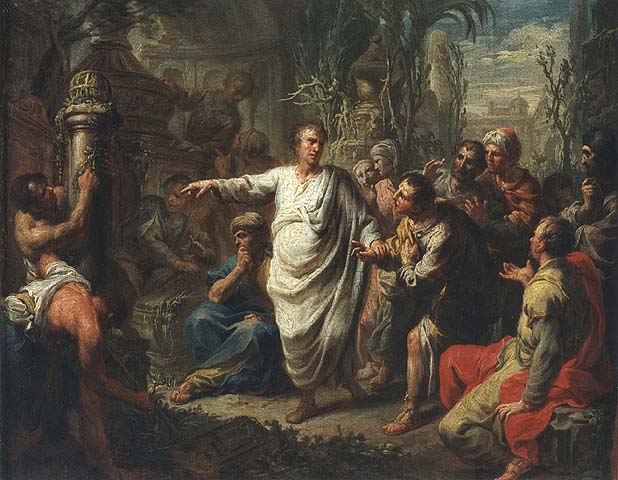
Marshall McLuhan
Understanding Media,
1964
Thursday, August 18, 2011
Why Bother With Marshall McLuhan?
Check out Alan Jacobs interesting and valuable meditation on the value (or lack thereof) in reading McLuhan:
"I have been reading McLuhan off and on since, at age sixteen, I bought a copy of The Gutenberg Galaxy. His centenary — McLuhan was born in Edmonton, Alberta on July 21, 1911 — provides an occasion for me to clarify my own oscillating responses to his work and his reputation. I have come to certain conclusions. First, that McLuhan never made arguments, only assertions. Second, that those assertions are usually wrong, and when they are not wrong they are highly debatable. Third, that McLuhan had an uncanny instinct for reading and quoting scholarly books that would become field-defining classics. Fourth, that McLuhan’s determination to bring the vast resources of humanistic scholarship to bear upon the analysis of new media is an astonishingly fruitful one, and an example to be followed. And finally, that once one has absorbed that example there is no need to read anything that McLuhan ever wrote."
http://www.thenewatlantis.com/publications/why-bother-with-marshall-mcluhan
Thursday, July 28, 2011
Interview with Read Schuchardt
Laureano Ralon has a great series of interviews over at his website, Figure/Ground Communications. His most recent interview is with my very own professor and mentor in media ecology, Read Schuchardt. Check it out:

http://figureground.ca/interviews/read-schuchardt/

http://figureground.ca/interviews/read-schuchardt/
Tuesday, June 7, 2011
Finding Your Way in a Sea of Information

Marshall and Eric McLuhan
Laws of Media,
1988
Monday, May 30, 2011
McLuhan and the Eyes of Faith
 |
I wouldn't have seen it if I hadn't believed it. Marshall McLuhan |
You Know Nothing of My Work!
2009
Saturday, May 28, 2011
Splitting the Etym

The "etym" is the fundamental 'bit' in the Joycean world, just as the atom is in the physical world. For Joyce, TV's annihilating of the 'etym' is as significant as in the realm of culture as the potentiality of destroying the atom in the physical world. Since, however, neither etym nor atom disappears as a result of the contemporary challenge, the process is abnihilisation, not actually a destruction.
Donald Theall
Beyond the Word,
1998
Tuesday, May 24, 2011
Media as Cliché as Probe
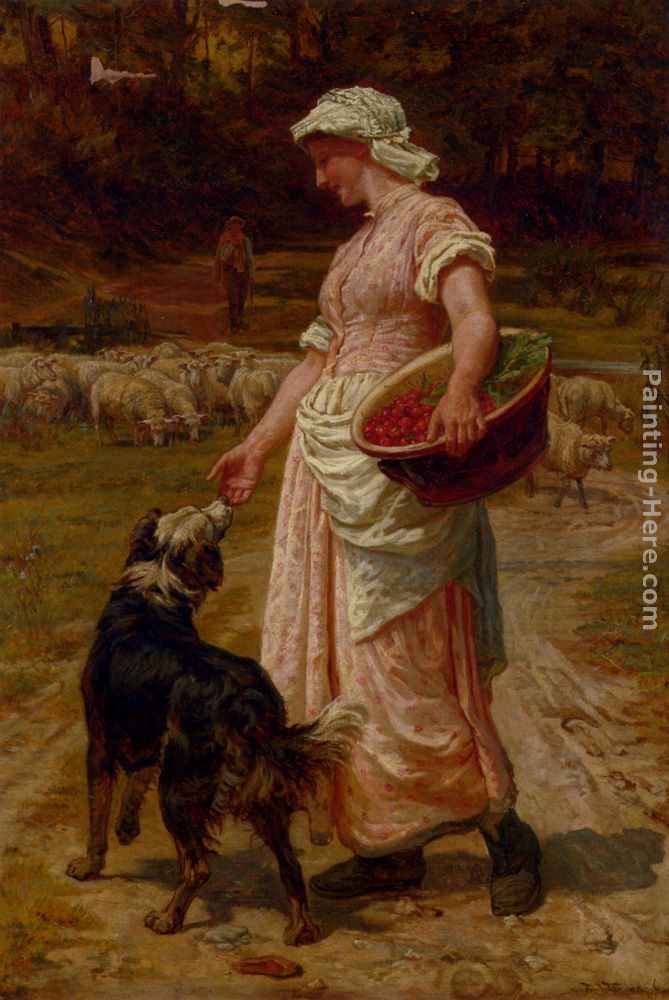
Marshall McLuhan
From Cliché to Archetype
1970
Friday, April 29, 2011
The Perpetual Nomad

Douglas Coupland, Marshall McLuhan:
You Know Nothing of My Work!
2009
Thursday, April 21, 2011
The Self Mover: Automobile
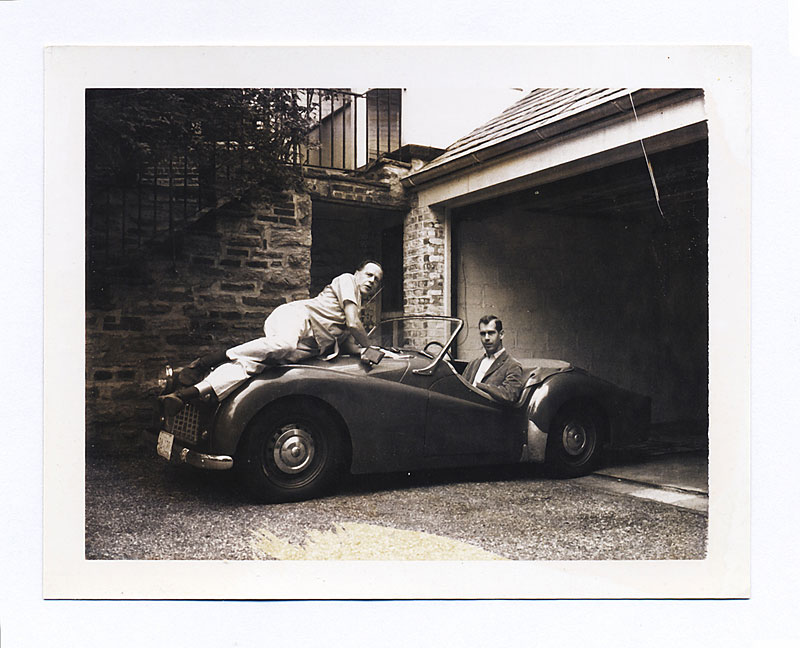 |
| Source |
Donald Theall, James Joyce's Techno-Poetics, 1997
Subscribe to:
Posts (Atom)